Artistic Expression & Tactile Learning for Early Childhood
Nurturing Genius: The Power of Artistic Expression and Tactile Learning in Early Childhood
From the squish of homemade playdough to the vibrant strokes of a toddler's first painting, artistic expression is much more than a way to pass the time. It is the very architecture of early childhood development. This comprehensive guide for parents and educators explores the profound benefits of mess-friendly crafts, the setup of Montessori-inspired art stations, and the absolute magic of tactile learning tools.
The Blueprint of a Child's Brain
The developmental trajectory of a child is intrinsically linked to their ability to interact with, manipulate, and interpret their physical environment. When a child squishes clay, mixes primary colors, or drags a crayon across a page, they are doing much more than creating art; they are building complex neurological frameworks. Every sensory input—the smell of the paint, the resistance of the dough, the contrast of the colors—fires neurons in the brain, creating new pathways that will later be used for advanced problem-solving, mathematics, and language comprehension.
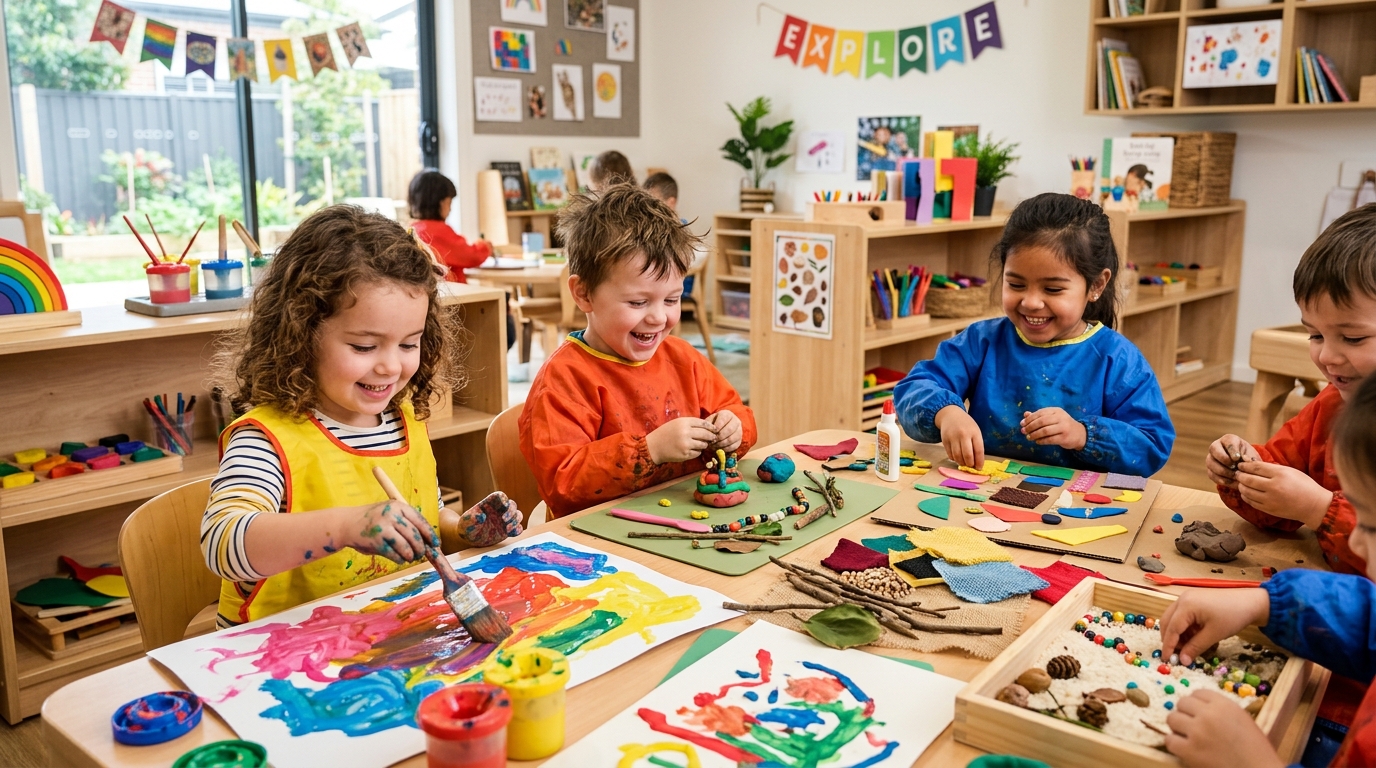
In the contemporary educational landscape, occupational therapists and educators heavily advocate for "process art." Unlike product-oriented crafts (where every child is expected to create an identical paper-plate frog), process art focuses entirely on the experiential journey. It doesn't matter what the final piece looks like; it matters what the child learned while making it. This open-ended play fosters an incredible sense of autonomy and self-esteem. When children realize there is no "wrong" way to paint or mold, their creative inhibitions vanish.
Furthermore, tactile learning serves as a fundamental catalyst for physical motor system refinement. The simple act of peeling a sticker, picking up a bead, or gripping a paintbrush enhances the pincer grasp and builds the small muscles in the hands and wrists. These are the exact same fine motor skills required later for writing, typing, and tying shoelaces. For children with Sensory Processing Disorder (SPD), tactile art activities are doubly important. Occupational therapists often use controlled, sensory-friendly art activities to help children under-responsive or over-responsive to stimuli learn how to regulate their nervous systems in a safe, predictable environment.
Creating a Montessori-Inspired Art Station
One of the most effective ways to encourage independent creativity is by curating an accessible, open art station. Inspired by Montessori principles, an art cart or dedicated shelving unit empowers children to fetch their own materials, create at their own pace, and—crucially—manage their own cleanup. But creating this space doesn't mean tossing every marker, crayon, and glitter tube you own onto a table. In fact, doing so is a recipe for overwhelming the child and destroying your living room.
The secret to a successful art station lies in curation and rotation. For a toddler, you might start with just two or three options available at any given time: a tray with three primary-colored crayons and blank paper, a small container of taste-safe playdough with a rolling pin, and a mess-free option like a Water Doodle mat. By limiting the choices, you prevent decision fatigue and encourage deeper engagement with the materials provided. As the child masters these tools, you can swap them out or introduce new mediums like watercolors, dot markers, or child-safe scissors.
The Playroom Reset Checklist
- Accessibility is KeyUse low, sturdy tables and open shelving. If a child has to ask you to reach the paper, it limits their spontaneous creativity.
- The Cleanup ToolkitIncorporate a small broom, a dustpan, a child-sized spray bottle with water, and a sponge right next to the art supplies. Montessori teaches us that cleaning up the mess is just as much a part of the activity as making the art.
- Quality Over QuantityInvest in highly pigmented, durable materials. A few high-quality, easy-to-grip crayons (like beeswax blocks or crayon rocks) are far better than a bucket of 100 cheap, easily broken ones that frustrate little hands.
Ultimately, the art station should be a "yes" space. If you are constantly hovering and saying, "No, don't mix those," or "Be careful with that," the magic is lost. Prepare the environment so that whatever the child chooses to do within that space is acceptable. Use washable rugs or plastic splat mats underneath the table, and dress them in a dedicated art smock or an old oversized t-shirt.
Sensory Bins: A Universe in a Box
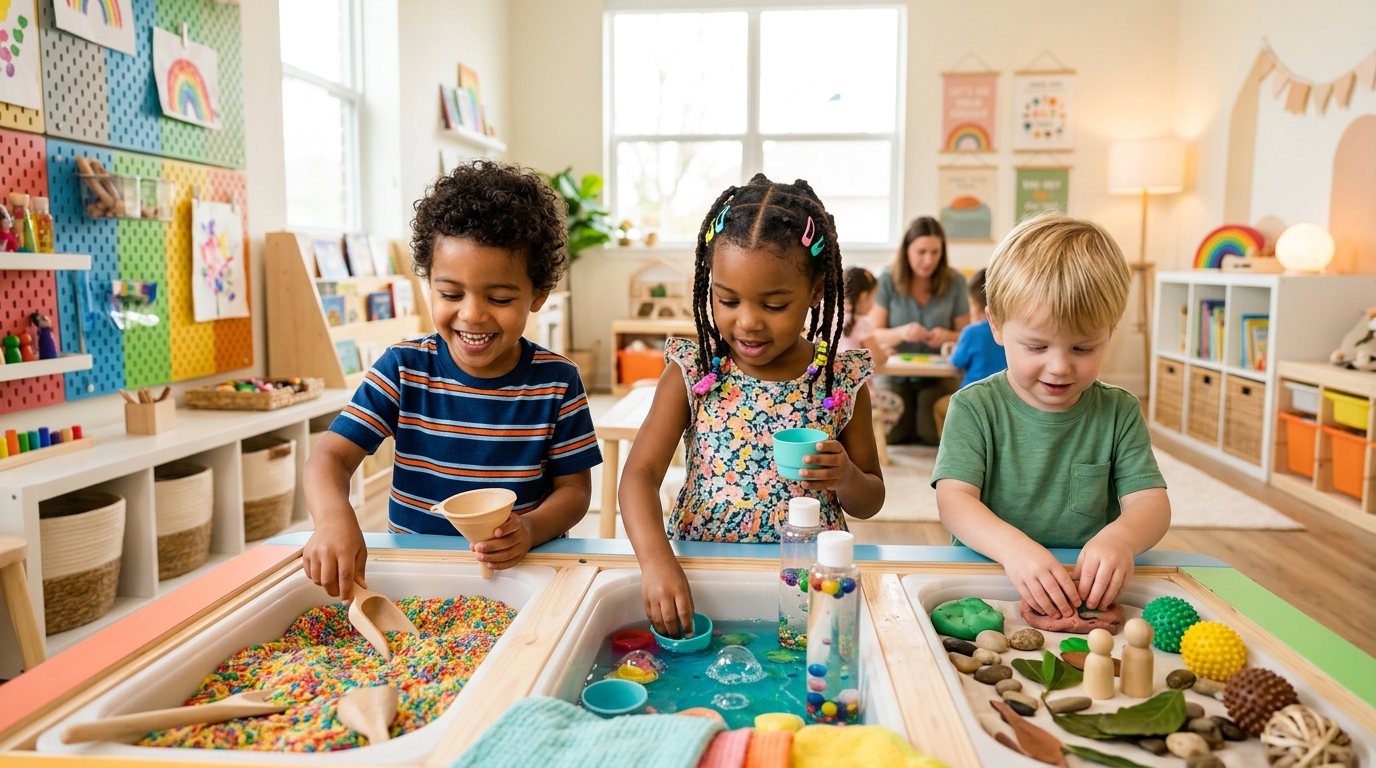
Sensory bins have taken the early childhood education world by storm, and for good reason. A sensory bin is simply a large container filled with materials that stimulate the senses, usually focusing on touch, sight, and sound. While they might seem like a modern Pinterest trend, they are deeply rooted in established occupational and speech therapy practices. They provide a self-contained world where a child can scoop, pour, bury, and discover—actions that are deeply satisfying to the developing brain.
For toddlers and babies who still explore the world primarily through their mouths, taste-safe sensory fillers are essential. Crushed graham crackers can mimic beach sand; cooked, dyed spaghetti can become a vibrant jungle floor; and water beads can be safely replicated using large tapioca pearls. By using edible bases, parents can relax and allow the child to engage in uninhibited exploration. For older preschoolers, the options expand to non-food items like kinetic sand, dried beans, uncooked rice, shredded paper, or even specialized items like Playfoam or water beads.
Speech-language pathologists frequently use sensory bins as language-building tools. By burying small objects (like plastic farm animals or alphabet letters) within the bin, children naturally engage in conversational turn-taking. "What did you find?" "It's a pig! Oink oink." "Let's dig deeper." The tactile input actually helps ground the child, making them more receptive to learning new vocabulary words like crunch, smooth, squishy, hide, and scoop. Furthermore, the heavy work of moving dense materials (like wet sand) provides proprioceptive input, which helps a dysregulated child feel calm and centered.
The Activity Generator
Looking for inspiration today? Select a category below to discover therapist-approved, engaging activities for your little one.
Edible Masterpieces
Divide plain Greek yogurt into a muffin tin. Add a single drop of food coloring to each cup and mix. Let your baby paint directly on a highchair tray. It's cool, smooth, and 100% safe to eat.
Whip the liquid from a can of chickpeas with a hand mixer until it forms stiff, fluffy peaks. Add a dash of food dye. It acts exactly like shaving cream but is entirely non-toxic and taste-safe for toddlers.
The Great Debate: Messy vs. Mess-Free
In the parenting community, a lively debate exists regarding the merits of truly messy play versus the convenience of mess-free products like Crayola's Color Wonder or Melissa & Doug's Water Wow. On one side of the aisle, purists argue that mess-free tools lack true creative freedom; as one parent in a popular online forum noted, "They get boring fast because there's no real color-mixing or texture involved. It's a party trick, not a deep creative endeavor."
However, the reality of modern parenting requires grace and practicality. We do not all have the bandwidth to clean up a papier-mâché explosion at 4:00 PM on a Tuesday. Mess-free alternatives are absolute lifesavers for travel, high-stress days, or environments where messes are strictly prohibited (like airplanes or waiting rooms). They allow children to practice pencil grip, hand-eye coordination, and visual tracking without the looming threat of permanently stained upholstery.
The ideal approach is a balanced one. Reserve true, uninhibited messy play—like finger painting, kinetic sand, or mud kitchens—for weekends, outdoor sessions, or times when you have the mental energy to supervise and facilitate a cleanup routine. Utilize the mess-free tools for quiet independent play while you cook dinner or take a breather. By offering both, you provide a rich, varied tactile diet while maintaining your own sanity.
Materials Safety: Decoding the Labels
As we encourage our children to dive hands-first into art and sensory play, safety must remain paramount. Children under the age of 12, and particularly toddlers, are highly vulnerable to toxins because their bodies are still developing, and they are prone to ingesting materials or absorbing them through thin, sensitive skin. It is not enough to simply look for the word "Non-Toxic" on a box, as this term is largely unregulated in marketing.
Instead, parents and educators should look for the AP (Approved Product) Seal issued by the Art and Creative Materials Institute (ACMI). Products bearing this seal have undergone extensive toxicological testing by board-certified medical experts to ensure they contain no materials in sufficient quantities to be toxic or injurious to humans, including acute and chronic hazards.
Additionally, look for packaging that states conformity to ASTM D-4236. This is a U.S. labeling standard indicating that the product has been evaluated for long-term health hazards. Avoid adult art supplies—such as professional acrylics, oil paints, rubber cements, or epoxy resins—as these often contain heavy metals, solvents, and VOCs that are highly dangerous for children. When in doubt, stick to trusted children's brands, or better yet, venture into your kitchen and make your own paints, doughs, and dyes from food-grade ingredients.
Frequently Asked Questions
This is completely normal! Mouthing is a primary way toddlers explore the world. First, ensure all materials are non-toxic (like beeswax crayons). If they bite it, calmly redirect: 'Crayons are for paper, not for mouths.' If they continue, simply pack the activity away for the day and try again tomorrow. You can also pivot to fully edible art, like yogurt painting, until the mouthing phase passes.
Make cleanup part of the fun, not a punishment. Use the 'Montessori Way' by providing child-sized cleaning tools—a little dustpan, a spray bottle with water, and a sponge. Model the behavior by saying, 'The painting is done! Now we get to do the bubble spray!' Play a dedicated clean-up song, and keep expectations age-appropriate.
Occupational therapists generally prefer crayons (specifically broken or short crayons, like Crayon Rocks) for early learners. Markers require very little pressure to deposit color, whereas crayons require the child to push down, which actively builds the intrinsic muscles of the hand and promotes a mature tripod grasp. Save the markers for later!
You don't need a whole room! A rolling, 3-tier utility cart tucked into the corner of the dining room or kitchen works perfectly. It allows you to roll the supplies to the table when it's art time and tuck them away when you have company. The key is organization, not square footage.
Help Your Child Fall in Love with Reading
Picture This! teaches visualization step-by-step so children can genuinely understand—and enjoy—what they read.