
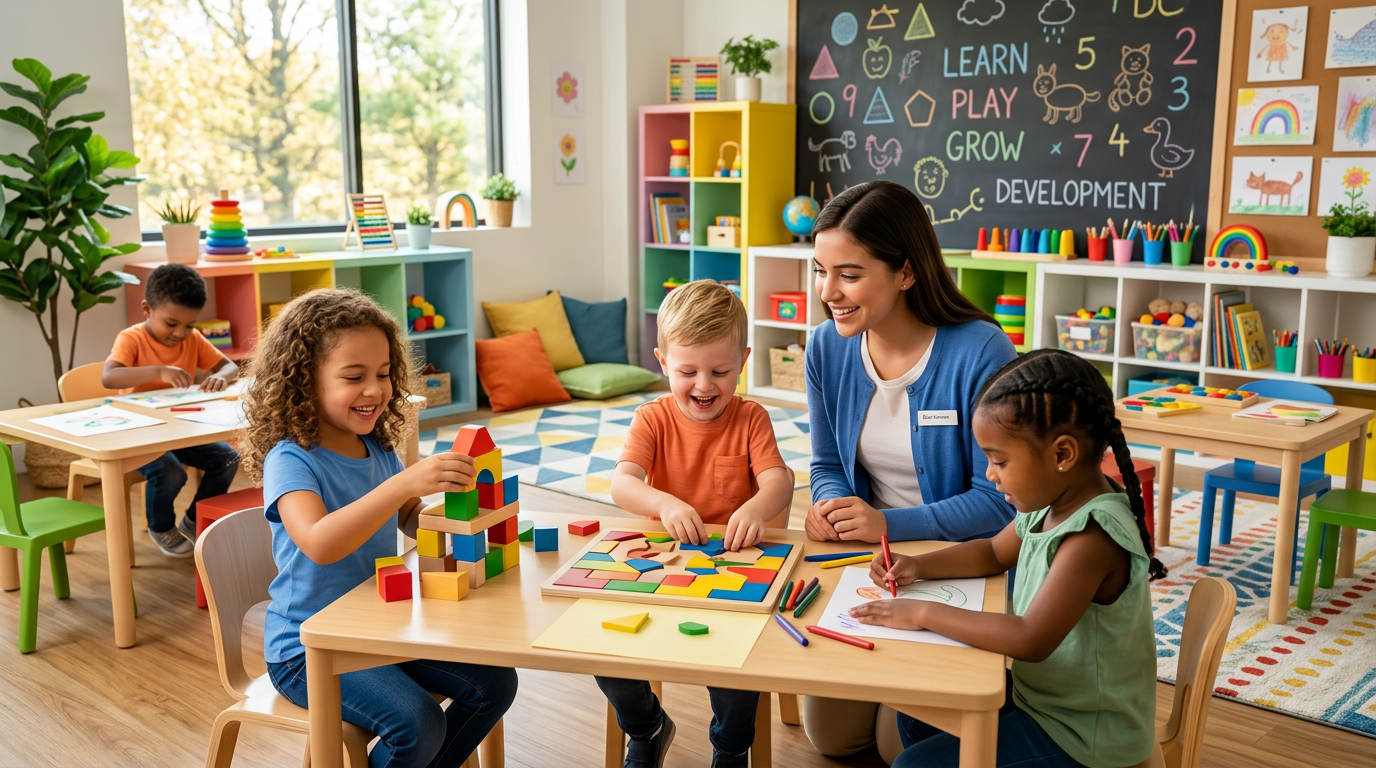
Unlock the Power of Play
A comprehensive guide for parents and educators on navigating child development, building lifelong cognitive connections, and fostering a love for learning through purposeful play.
Brain Development & Play
At birth, a baby's brain contains 100 billion neurons—as many stars as there are in the Milky Way. By age three, they will grow an astonishing 1,000 trillion brain connections (synapses).
These neurological connections happen constantly, day in and day out, during early childhood. They are shaped by a combination of nature and the environment. However, connections that are not wired together and frequently used will start to fade away over time in a process called pruning.
Play is the brain's absolute favorite way of learning. Stimulation through purposeful play forms the root of the abilities a child will have as an adult. It is not just about keeping them busy; it is about creating a path to teach, to inspire, and to give them the confidence to learn.
The 5 Domains of Learning
- Cognitive: Problem-solving, reasoning, decision-making, creativity, and the ability to focus.
- Social: Communication, friendship building, cooperation, and social problem-solving.
- Emotional: Expressing feelings, self-regulation, and building self-esteem.
- Language: Building vocabulary, speech acquisition, and conversation skills.
- Physical: Fine motor skills (hands/fingers) and gross motor skills (arms/legs/torso, balance, and coordination).
Constructivist Learning Theorists
Developmentally Appropriate Practice (DAP)
To support optimal learning, educators must combine play with purpose. The NAEYC outlines three main considerations for teachers planning learning experiences:
- What is known about child development and learning for specific age groups?
- What are the individual child's strengths, interests, learning style, and abilities?
- What is the social and cultural context within the child's family and community?
Help Your Child Fall in Love with Reading
Picture This! teaches visualization step-by-step so children can genuinely understand—and enjoy—what they read.
Related Articles
Sources & References
- Bright Futures Milestones and Anticipatory Guidance - American Academy of Pediatrics
- Principles of Child Development and Learning and Implications That ... - NAEYC
- Learning through play | UNICEF.org
- The Case of Brain Science and Guided Play: A Developing Story - NAEYC
- Enhancing and Practicing Executive Function Skills with Children from Infancy to Adolescence
- How Kids Learn to Play: 6 Stages of Play Development - Pathways.org
- Investigating the Differential Impact of Play-Based versus Academic-Focused Early Childhood Education Systems on Holistic Child Development Outcomes
- Complete Guide to Developmental Milestones - Child Mind Institute
- Play Helps Children Build Better Brains. Here Are Some Ways to Get Kids Learning - Harvard GSE
- How to Help Your Child Develop Empathy | ZERO TO THREE