

Mastering Language Acquisition
The Pillars of Literacy
Effective language acquisition is built on several foundational methodologies. Explore the key pillars below to understand how children learn to read effectively.
Systematic Synthetic Phonics
The most effective way to crack the reading code is through a step-by-step approach. Children must first learn individual sounds, then practice blending (gluing) those sounds together to form words.
- Match sounds with letters first.
- Blend sounds to read single words.
- Memorize "tricky words" (like 'the' and 'was').
Experience Cognitive Offloading
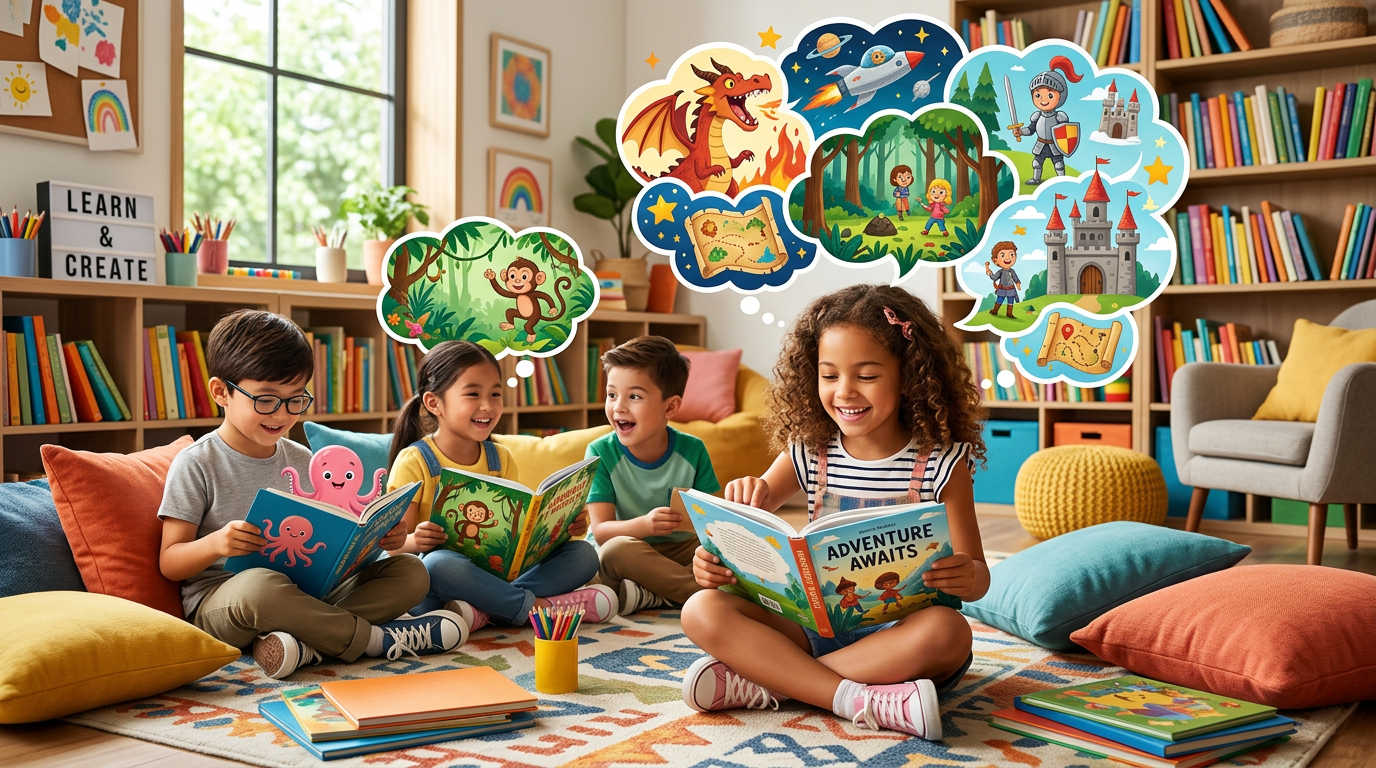
Reading complex sentences demands high working memory. By explicitly teaching children to visualize (creating a "mental movie"), we reduce cognitive overload. Click the button to see how the brain simplifies text into concept imagery.
"The massive, grey creature with a long, flexible trunk and large, flapping ears slowly marched across the dry, golden savanna under the scorching afternoon sun."
Concept Imaged: Elephant + Hot Savanna
The brain holds these simple visual concepts much easier than 25 individual words.
Classroom & Home Troubleshooting
Addressing common obstacles in modern language acquisition.
When a child looks at a picture of a rat and guesses the word is "rat" without looking at the letters, they are missing the foundation of decoding. Best Practice: Gently cover the picture. Direct their attention to the first letter of the word, and have them sound out the word linearly. Encourage sounding out rather than utilizing environmental context to guess.
A lack of interest is often linked to "literary snobbery." If a reluctant reader (especially older children or teens) is only exposed to books they find dull, they will view reading as a chore. Best Practice: Find out what they are passionate about. If they love the history of the Roman Empire, video game lore, or technical manuals, provide that material. Reading for enjoyment is the ultimate goal; the subject matter is secondary.
Modern attention spans are evolving, and long study sessions often lead to frustration rather than retention.
The Golden Rule of Attention:
A child's typical attention span for direct instruction in minutes is roughly equal to their Age + 1.
Best Practice: Utilize micro-learning. Consistent, focused sessions of 15-20 minutes a day yield significantly better results than forced, hour-long reading marathons.
Children today have often had smartphones since a very young age, leading to a habit of passive consumption (like swiping through endless short videos). Best Practice: Transition from passive screen time to "guilt-free" active screen time. Utilize ad-free, educational applications that require cognitive input, interaction, and active reading to progress.
Anatomy of an Effective Reading Tool
AI Voice Listening
The best modern tools utilize AI to listen to a child read out loud. This provides immediate, real-time feedback on pronunciation and fluency without requiring constant adult supervision.
Ad-Free & Safe
Educational environments must be completely free of advertisements and in-app purchases. This ensures a 100% safe environment where learning isn't interrupted by commercial distractions.
Micro-Paced Routines
High-quality programs are designed for short, daily challenges (15-20 minutes). This builds a solid learning routine, prevents burnout, and ensures continuous, incremental progress.
Help Your Child Fall in Love with Reading
Picture This! teaches visualization step-by-step so children can genuinely understand—and enjoy—what they read.
Related Articles


Sources & References
- A Full Breakdown of the Science of Reading Components | Lexia
- Foundational Skills to Support Reading for Understanding in Kindergarten Through 3rd Grade - Institute of Education Sciences (IES)
- A meta-analysis of the effects of foundational skills and multicomponent reading interventions on reading comprehension for primary-grade students - PMC
- Dialogic Reading: An Effective Way to Read Aloud with Young Children - Reading Rockets
- Reading Comprehension and Executive Function - CHADD
- Executive Functions and the Improvement of Thinking Abilities: The Intervention in Reading Comprehension - Frontiers
- What is Scarborough's Reading Rope? - Lexia
- Think-alouds | Reading Rockets
- Age-related Reading Milestones - LearningRx Brain Training
- ESSA Ratings: Evidence-Based Reading Intervention Programs | Lexia