15 Game-Changing Tips for Parenting Lifestyle & Home Organization
Welcome to the ultimate guide to taking your home from chaotic to calm! Raising children is a messy, unpredictable journey, but strong organization and lifestyle routines can reduce daily friction. From tackling the endless laundry mountain to fostering emotional intelligence with a "calm corner," these 15 actionable tips will help you build a resilient, organized, and happy household.
Instead of waiting until the weekend to do a massive, exhausting deep clean, introduce the concept of the 15-minute daily reset to your household. Set a visual timer for exactly 15 minutes, put on a high-energy playlist, and assign every family member a specific zone or task. The goal isn't perfection; it's simply resetting the space for the next day. Kids love the race-against-the-clock aspect, and it teaches them that cleaning is just a quick daily habit rather than a dreaded weekend punishment.
During this sprint, focus only on high-traffic areas. Clear the kitchen counters, put wayward toys back into their bins, and load the dishwasher. For younger children, give them highly specific, manageable tasks, such as 'put all the blue blocks in this basket' or 'line up the shoes by the front door.' This targeted approach prevents them from feeling overwhelmed by the vague instruction to 'clean up.'
Over time, this 15-minute habit drastically reduces the overall mental load on parents. Waking up to a reasonably tidy kitchen and a clear living room floor sets a positive, calm tone for the morning, completely shifting the household's energy. It's a small investment of time that yields massive dividends in family wellness and domestic stability.
Did you know? Studies show that living in a cluttered environment directly increases cortisol (stress hormone) levels in parents.
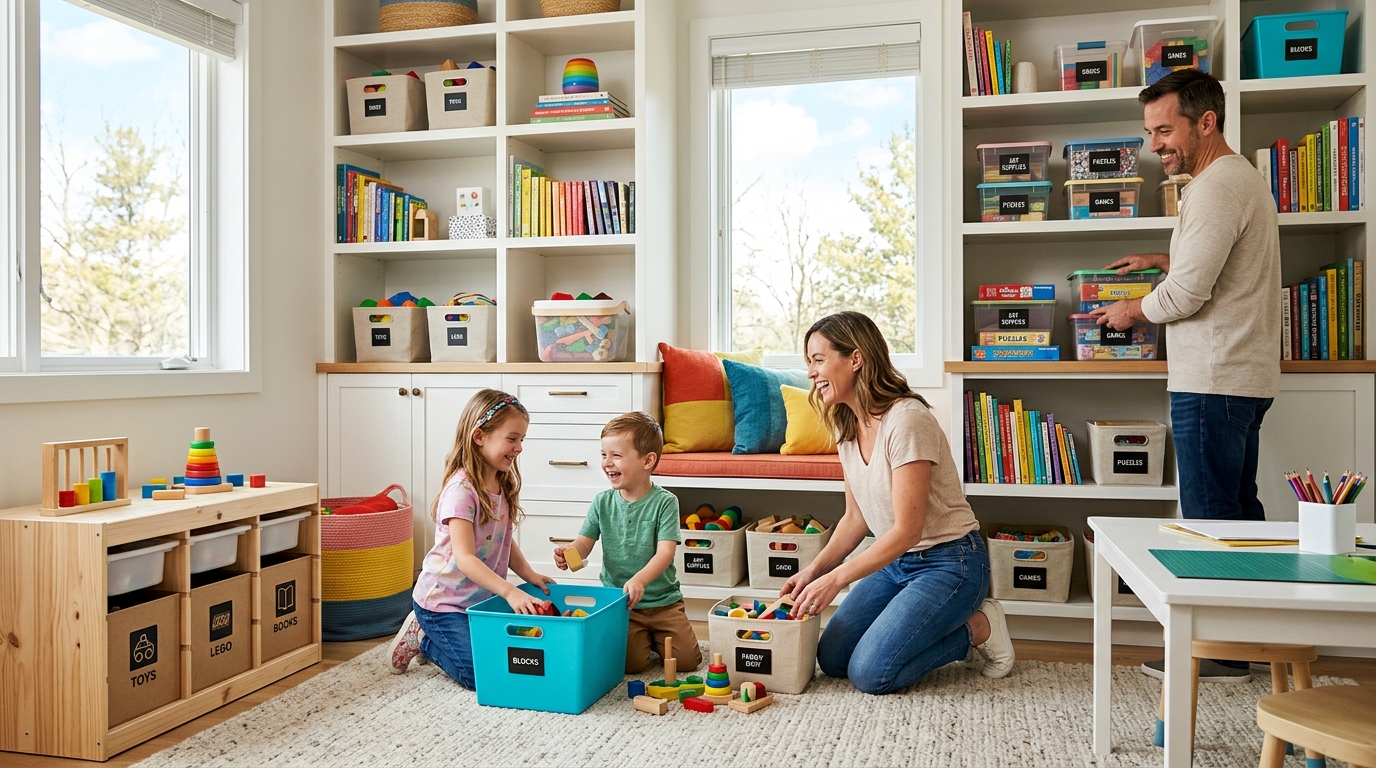
It seems counterintuitive, but providing kids with endless toy options often leads to decision fatigue and shallow, scattered play. By setting up a toy rotation system, you divide their toys into several distinct bins, keeping only one bin out at a time while the others live in a closet or garage. When you rotate the bins every few weeks, old toys suddenly feel brand new, and children engage with them for much longer periods.
To start a rotation, wait until the kids are asleep and gather every toy in the house. Sort them into broad categories: building toys (blocks, tiles), pretend play (kitchen items, dolls), active play (balls, jump ropes), and educational/creative (puzzles, art). Build your rotation bins by taking a little bit from each category. This ensures that whichever bin is currently 'active' provides a well-rounded play experience.
Not only does this method foster better executive functioning and sustained attention in young minds, but it makes the daily cleanup incredibly easy. When there are only twenty items in the playroom instead of two hundred, a child can realistically manage the cleanup process themselves without experiencing a meltdown.
Pro Tip: Keep beloved comfort items (like a favorite stuffed animal) out of the rotation. They should always remain accessible to provide emotional security.
The question 'What's for dinner?' strikes fear into the hearts of busy parents everywhere. Meal planning from scratch every single week requires immense mental energy. Enter the 'Theme Night' strategy. By assigning a specific culinary category to each day (e.g., <a href="https://www.familyfoodonthetable.com/theme-night-dinners/" target="_blank" rel="noopener noreferrer" className="text-blue-600 hover:underline font-medium">Meatless Monday, Taco Tuesday, Pasta Wednesday</a>, Breakfast-for-Dinner Thursday, Pizza Friday), you narrow your choices significantly, making grocery shopping and cooking a breeze.
Themes also allow for incredible flexibility while maintaining a predictable structure. 'Taco Tuesday' doesn't mean you have to eat hard-shell ground beef tacos every week. It can mean chicken fajitas, fish tacos, a burrito bowl, or even taco salads. The structure simply gives your brain a starting point. Furthermore, predictable themes provide comfort to picky eaters who thrive on knowing what to expect.
Get your children involved by letting them choose the specific meal within the theme once a week. If it's Pasta Night, let your five-year-old decide between spaghetti or macaroni. Giving them this small sense of autonomy decreases dinnertime power struggles and makes them far more likely to actually eat the food provided.
Try creating a master list of 4-5 meals that fit under each theme. When meal planning day comes, just pick one from each list and you're done in 5 minutes!
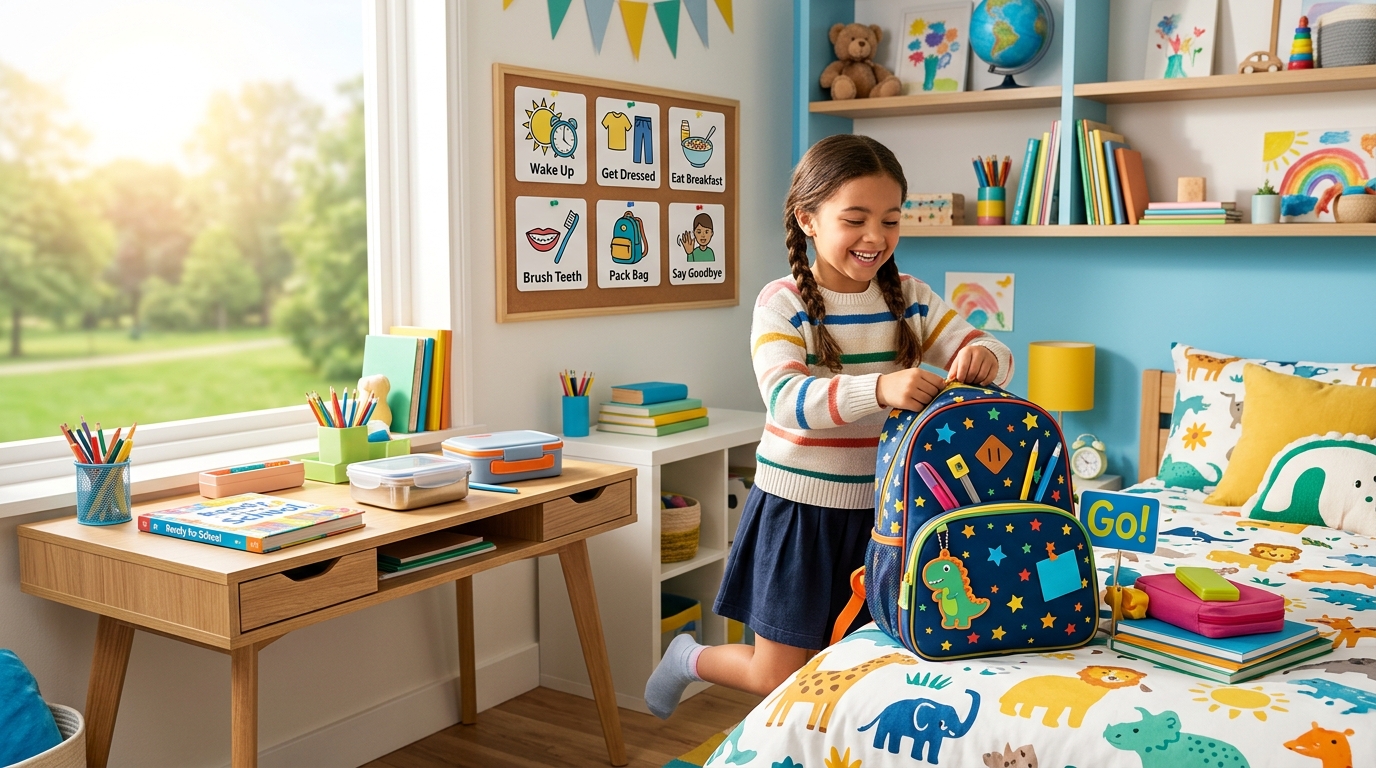
Morning routines are notoriously stressful, often resulting in parents nagging their children to get dressed, brush their teeth, and eat breakfast. You can eliminate this friction by creating a <a href="https://www.aveeno.com/journal/kids/stress-free-school-morning-routine-checklist-kids-3-8" target="_blank" rel="noopener noreferrer" className="text-blue-600 hover:underline font-medium">visual morning checklist</a>. For pre-readers, use simple icons or photos of the child doing the specific tasks. Seeing a picture of a toothbrush, a shirt, and a backpack helps them understand exactly what needs to happen before they can play or leave.
Hang the checklist at their eye level, perhaps in their bedroom or the bathroom. You can make it interactive by placing it in a plastic sleeve and giving them a dry-erase marker to check off tasks, or by using velcro tabs that they move from a 'To-Do' side to a 'Done' side. The physical act of moving or marking a task provides a hit of dopamine, encouraging them to keep going.
Using a visual routine transfers the responsibility from the parent to the child and the chart. Instead of saying, 'Go brush your teeth right now!', you can simply ask, 'What's the next thing on your morning chart?' This subtle shift builds their executive functioning skills and allows them to feel capable and in control of their own morning.
According to child psychologists, visual routines reduce morning stress by giving kids a sense of predictability and control over their environment.
Involving children in household chores isn't just about lightening your load; it's a fundamental part of teaching them life skills and resilience. When children contribute to the functioning of the household, they develop a sense of belonging and competence. Creating a clear, structured chore chart sets the expectation that everyone in the family works together as a team.
Many families find success by separating basic 'citizen of the household' chores (like making their bed or clearing their plate) from 'paid' chores (like folding laundry, vacuuming, or taking out the trash). Connecting extra chores to <a href="https://www.truelinkfinancial.com/blog/teaching-teens-life-skills-through-a-chores-for-allowance-system" target="_blank" rel="noopener noreferrer" className="text-blue-600 hover:underline font-medium">an allowance system</a> provides a fantastic, hands-on opportunity to teach financial literacy. When they want a new toy, they learn they have to save their earned money for it, teaching delayed gratification.
Be sure to assign age-appropriate tasks. A three-year-old can sort socks or put napkins on the table, while an eight-year-old can load the dishwasher or sweep the floor. Praise the effort rather than the perfect execution. The goal is to build a habit of contribution and teamwork, not to have a spotless house right away.
A Harvard University study found that children who were expected to do chores had higher self-esteem, were more responsible, and were better equipped to deal with frustration.
As kids get older, the number of extracurricular activities, school events, and appointments grows exponentially. A physical calendar on the fridge often falls short because it can't be updated on the go, and only the person standing in front of it knows what's happening. Transitioning to a <a href="https://apps.apple.com/us/app/cozi-family-organizer/id407108860" target="_blank" rel="noopener noreferrer" className="text-blue-600 hover:underline font-medium">shared digital family calendar (using apps like Cozi, Maple, or Google Calendar)</a> is a game-changer for modern family organization.
With a digital system, every parent or caregiver has real-time access to the schedule from their phone. You can color-code events by family member, set automatic reminders, and even integrate meal plans and grocery lists. If a coach reschedules a practice via email while you're at work, you can update the calendar immediately, and your partner gets the notification instantly.
For older children and teens who have their own devices, give them access to the family calendar. This allows them to see their upcoming week, advocate for their own time, and add their own school project deadlines or social events. It's a great way to transition the mental load of time management from the parent to the growing adolescent.
Pro tip: Sit down for 10 minutes every Sunday evening for a 'Family Meeting' to review the digital calendar for the upcoming week so everyone is on the same page.
Trying to secretly throw away or donate a child's toys while they sleep is a recipe for disaster if they discover what you've done. It breaks their trust. Instead, utilize the meltdown-free decluttering method by involving them in the decision-making process. The secret is to reframe the activity. Instead of saying, 'We are getting rid of your toys,' say, 'We are making room for new things by passing on toys you've outgrown to kids who really need them.'
Give them a specific, limited container—like a single cardboard box—and ask them to fill it with items they want to donate. If they struggle to part with things, implement a 'quarantine bin.' If they aren't sure about a toy, put it in a box in the garage for a month. If they don't ask for it within 30 days, it is safe to donate.
For sentimental items or artwork, take photos of the child holding their creation and create a digital photo book at the end of the year. This allows them to keep the memory of the item without keeping the physical clutter. Building these decluttering muscles early helps children avoid developing hoarding tendencies later in life.
The 'One In, One Out' rule is highly effective for maintaining a decluttered space. If a child receives a new toy, they must choose one old toy to donate.
While we often focus on morning routines, the <a href="https://www.peacefulparenthappykids.com/read/building-an-evening-routine-for-kids-of-different-ages" target="_blank" rel="noopener noreferrer" className="text-blue-600 hover:underline font-medium">evening routine is arguably more critical</a>. A chaotic evening leads to poor sleep, which directly translates to a cranky, difficult morning. Establishing a predictable wind-down sequence signals to a child's brain that it is time to transition from the active day into a restful state. This consistency is vital for their emotional and physical well-being.
A standard evening routine should involve a predictable series of steps: a warm bath, putting on pajamas, brushing teeth, and reading a book together. Avoid activating activities like roughhousing or watching fast-paced television right before bed. Keep the lights dim to encourage the natural production of melatonin.
For parents, the evening routine shouldn't end when the kids fall asleep. Take 10 to 15 minutes to 'close down' the house. Start the dishwasher, wipe the counters, and prep the coffee maker. Taking care of these small tasks your future self will thank you for ensures you wake up to a peaceful environment, drastically reducing your own morning anxiety.
Sleep experts recommend turning off all screens at least one hour before bedtime to ensure the blue light doesn't disrupt a child's natural sleep cycle.
Technology is an incredible tool, but it can easily overtake family life if left unchecked. Constantly being plugged into devices fractures our attention and prevents meaningful connection. To combat this, establish <a href="https://bewell.ny.gov/digital-wellness-parents-and-caregivers" target="_blank" rel="noopener noreferrer" className="text-blue-600 hover:underline font-medium">specific 'Tech-Free Zones' in your home</a> where phones, tablets, and laptops are strictly prohibited for both kids and adults.
The dining room table should be the primary tech-free zone. Shared meals are one of the few times a day families can truly connect, share their highs and lows, and practice conversational skills. When devices are present, even if they are face down, they act as a psychological barrier to engagement. Another critical tech-free zone is the bedroom, which protects sleep quality and prevents late-night scrolling.
Remember that kids learn by observing their parents. If you want your children to have a healthy relationship with technology, you must model it. When you are in a tech-free zone, ensure your own phone is put away. Practicing digital wellness as a family fosters better emotional intelligence and ensures technology remains a tool rather than a crutch.
Set up a central 'charging station' in the living room or kitchen where all family devices are plugged in overnight, keeping them out of bedrooms.
When a child is having a meltdown, their brain is in a state of fight-or-flight. Punishing them or putting them in 'time out' often escalates the situation. Instead, reframe the concept of a time out into a 'time in' by creating a dedicated Calm Corner in your home. This is not a place of punishment, but a safe, cozy spot where a child can go to process overwhelming emotions and regulate their nervous system.
Stock the calm corner with sensory-soothing items. Include soft pillows, a weighted blanket, fidget toys, a snow globe or visual timer to watch, and books about emotions. You can also print out a simple chart showing different facial expressions to help them identify what they are feeling, along with a chart demonstrating deep breathing exercises.
Introduce the calm corner when the child is happy and regulated. Practice using the tools together so they know what to do when big feelings strike. When a meltdown occurs, gently guide them to the space and offer to sit with them or give them space, depending on what they need. This proactive approach builds profound emotional intelligence and self-regulation skills.
A Calm Corner teaches children that all emotions are okay and welcome, but we must use safe strategies to manage and process them.
The fastest way to ruin a morning is a frantic hunt for a missing library book or a lost left shoe five minutes before the bus arrives. You can eliminate this entirely by making 'pre-packing' a mandatory part of the evening routine. Before anyone goes to bed, all items required for the next day must be staged and ready to go by the front door.
Have children pack their own backpacks with their homework, permission slips, and library books. Layout their clothes for the next day, including socks and underwear, to avoid morning wardrobe battles. For parents, this means prepping lunches, filling water bottles, and placing your keys and work bag in a designated spot.
This habit requires some discipline to establish, especially when you are tired at night, but the payoff is immense. When everything is prepped, mornings transform from a stressful rush into a calm, predictable sequence. It gives you the space to actually sit and enjoy a cup of coffee or share a laugh with your kids before heading out the door.
Try the 'Launch Pad' method: create a designated spot near the door with hooks and baskets where all backpacks, shoes, and coats live permanently.
If you feel like you spend half your day opening string cheese and fetching crackers, it is time to set up an accessible snack station. Empowering your children to get their own snacks fosters independence, teaches them to listen to their own hunger cues, and drastically reduces the number of interruptions you experience throughout the day.
Dedicate a low drawer in the refrigerator and a low basket in the pantry specifically for kid-approved snacks. In the fridge, pre-wash and cut fruit, portion out vegetables, and stock yogurt tubes or cheese sticks. In the pantry basket, include applesauce pouches, whole-grain crackers, and granola bars. Explain the rules clearly—for example, they can choose one item from the fridge and one from the pantry between lunch and dinner.
By making healthy choices easily accessible and pre-portioned, you remove the power struggle over food. You maintain control over *what* they eat by being the one who stocks the station, while they gain control over *when* and *which* specific item they choose. It is a win-win for family harmony and nutrition.
Spend 20 minutes on Sunday washing and chopping all your fruits and vegetables for the week so they are ready for instant snacking.
Laundry is the great nemesis of home organization because it is truly never finished. To manage it without losing your mind, you have to rethink the traditional system. First, stop sorting everything into microscopic categories. For most everyday modern fabrics, washing everything together on a cold cycle is perfectly fine and saves immense amounts of time.
Give every child their own laundry basket in their room. Once they are old enough (around 7 or 8), teach them how to do their own laundry from start to finish. If they are younger, implement the <a href="https://cleanmama.com/laundry-day-vs-laundry-every-day-two-methods-that-really-work/" target="_blank" rel="noopener noreferrer" className="text-blue-600 hover:underline font-medium">'one load a day' method</a>. Throw a load in the wash first thing in the morning, move it to the dryer at lunch, and fold it in the evening. This prevents the dreaded 'Laundry Mountain' from building up by the weekend.
Lower your folding standards for kids' clothes. Children do not care if their pajamas or t-shirts are crisply folded. Use a bin system in their drawers: one bin for shirts, one for pants, one for socks. They can just toss the clean items into the appropriate bin. It takes a fraction of the time and the clothes are still put away.
Fact: The 'no-fold' method for kids' casual clothes can save a family up to 2 hours of household labor every single week.
Mail, school flyers, bills, and permission slips have a sneaky way of multiplying and covering every countertop in the kitchen. To combat this paper clutter, you need to establish a Family Command Center. This is a central, highly visible hub—often a wall in the kitchen or hallway—where all incoming information and essential daily items are processed.
A functional command center should include a few key elements: a wall calendar (or a digital display), a bulletin board for important flyers, a charging station for devices, hooks for keys, and an inbox/outbox system for paperwork. When mail comes in, it immediately goes into the command center. When a permission slip needs signing, it goes in the outbox.
Processing the command center takes just a few minutes during your evening routine. Toss the junk mail, pay the bills, and sign the school forms. By giving paper a specific 'home,' you prevent it from migrating around the house and save yourself the stress of frantically searching for that important document when you really need it.
Make sure your command center is located in a natural 'drop zone'—the place your family naturally dumps their things when they walk through the door.
In the relentless pursuit of optimizing our children's lives, parents often put their own physical and mental well-being on the absolute bottom of the priority list. However, parental burnout is real, and an exhausted, resentful parent cannot foster a positive, emotionally intelligent home. <a href="https://lindnercenterofhope.org/parenting-stress/" target="_blank" rel="noopener noreferrer" className="text-blue-600 hover:underline font-medium">Prioritizing your own self-care is not selfish; it is a fundamental requirement of good parenting</a>.
Self-care doesn't necessarily mean expensive spa days or weekend getaways. It means building tiny, non-negotiable moments of restoration into your daily routine. This could be waking up 15 minutes before the kids to drink your coffee in complete silence, taking a brisk 10-minute walk on your lunch break, or strictly enforcing a 'parents only' time after 8:00 PM.
When your children see you taking time to exercise, read a book, or simply rest, you are modeling healthy boundaries and stress management. You are teaching them that adults are valuable individuals with needs, not just service providers. A regulated, calm parent is the ultimate foundation for a happy, organized, and thriving family.
The U.S. Surgeon General recently issued an advisory highlighting parental stress as a critical public health issue. Taking time to recharge is a medical necessity!
Help Your Child Fall in Love with Reading
Picture This! teaches visualization step-by-step so children can genuinely understand—and enjoy—what they read.