Kiddz.club
Sensory Play Guide: Brain Development for Kids
InformationalMarch 18, 202612 min read

Sensory Play Guide: Brain Development for Kids

For Parents & Teachers

The Ultimate Guide to
Sensory Play

Unlock the neurobiological secrets of early childhood development. Discover how interactive, messy, and mindful play builds the brain, fosters emotional regulation, and creates lifelong learners.

Beyond the Basic Five: The 8 Senses

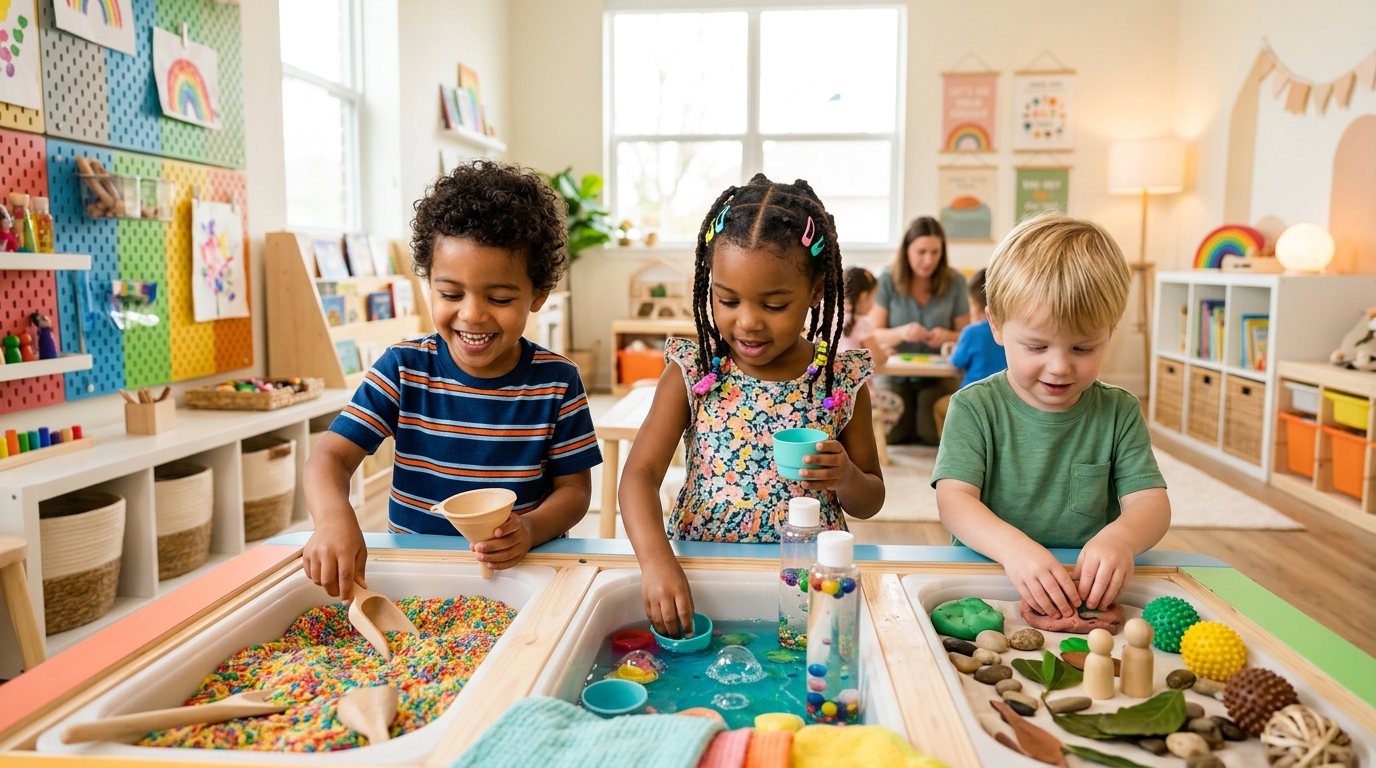
We all learned the five basic senses in elementary school, but pediatric occupational therapists and developmental experts recognize that the human body actually relies on eight distinct sensory systems to navigate the world. Sensory play is not just about making a mess; it is about intentionally activating these systems to help toddlers build an understanding of their physical and social environments.

1. Tactile (Touch)

The sense of touch provides information about texture, temperature, and pressure. It is a precursor to fine motor skills. Activities exposing children to wet versus dry, or warm versus cold, provide crucial physical feedback and language development opportunities.

2. Visual (Sight)

Visual input guides movement and helps children track objects. Bright colors, contrasting shapes, and mirrored play allow infants and toddlers to recognize patterns and develop spatial awareness necessary for later reading and math.

3. Auditory (Hearing)

Listening to music, environmental sounds, or simple noisemakers develops a child's ability to focus and process language. Sound location and auditory discrimination are vital for communication.

4. Olfactory (Smell)

Smell is deeply tied to memory and emotional regulation. Engaging the olfactory system with scented playdough or smelling bottles can help soothe a child or alert their nervous system.

5. Gustatory (Taste)

Babies instinctively put objects in their mouths to learn. Exploring different food textures (smooth, lumpy, crunchy) and tastes safely encourages fussy eaters to become more open to new culinary experiences.

6. Vestibular (Balance)

Located in the inner ear, this hidden sense involves movement and balance. It tells us where our body is in space. Swinging, spinning, hanging from monkey bars, and rolling down hills are essential vestibular activities that help children stand and sit without falling.

7. Proprioception (Body Awareness)

Receptors in muscles and joints tell the brain how much force to use. It helps a child know how to pick up a fragile egg versus a heavy gallon of milk. Proprioception is developed through 'heavy work' like jumping, crashing, bear hugs, and carrying groceries.

8. Interoception (Internal Cues)

This is the ability to understand internal bodily signals. It tells a child when they are hungry, thirsty, tired, anxious, or need to use the bathroom. Recognizing these internal states is the foundation of emotional self-regulation.

Help Your Child Fall in Love with Reading

Picture This! teaches visualization step-by-step so children can genuinely understand—and enjoy—what they read.