How to Establish a Stress-Free Morning Routine for School
Transform your chaotic, rushed mornings into a calm, predictable, and connection-filled launch to the day using science-backed strategies, visual schedules, and behavioral psychology.
The Science of a Calm Morning
For millions of families, school mornings are a frantic battle against the clock, but they don't have to be. By establishing a predictable, stress-free routine, you align with your child's biological needs, setting them up for better attention, motivation, and emotional resilience throughout the day.
Predictability calms the nervous system. The human body's internal biological clocks require consistency. When we introduce chaos, yelling, and rushing, we trigger a child's fight-or-flight response, flooding their system with cortisol. This guide will walk you through the prerequisites and step-by-step actions required to build a morning routine that fosters peace, independence, and school readiness.
Prerequisites: The Night Before
A successful morning actually begins the night before. You cannot expect a smooth transition if the foundation hasn't been laid. Here are the three critical components you must establish before the sun even rises.
Step-by-Step Morning Execution
The Soft Start & Buffer Time
Instead of blaring alarms and shouting "Time to get up!", utilize a "Soft Start." This is a gentle, inviting way to begin the day. Open the curtains to let in natural light (which signals the brain's circadian rhythm to halt melatonin production), play soft, positive music, and offer a gentle physical connection, like a back rub or a hug.
Crucially, implement Buffer Time. Buffer time is the intentional cushion of extra minutes you add to your schedule. If it takes exactly 45 minutes to get ready, wake up 60 minutes before departure. This 15-minute safety net gives you room to handle unexpected delays (a spilled drink, a missing homework folder) without throwing your nervous system into a state of panic.
Deploy a Visual Schedule
Often, children do not respond to adult requests because they don't actually understand or remember what is expected of them in a groggy state. Verbal instructions like "Go upstairs, brush your teeth, get dressed, and bring down your backpack" are too complex for a waking brain to process, leading to dawdling and eventual parental yelling.
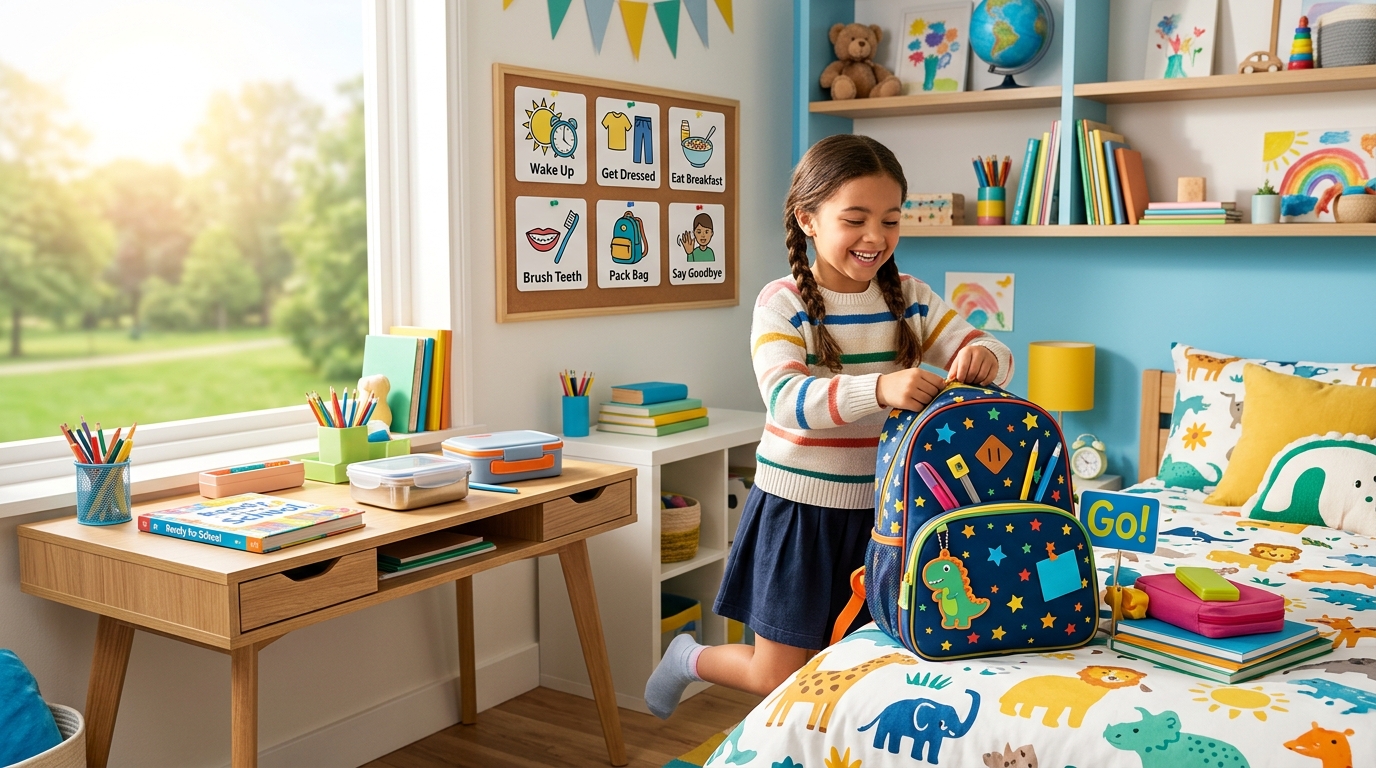
A Visual Schedule is a powerful tool used widely in educational and behavioral therapy (ABA) that uses pictures or photos to show the steps of a routine in order. Instead of nagging, you simply say, "Check your schedule." It creates predictability, reduces anxiety, limits the amount of "no's" you have to say, and empowers your child to become independent.
Example 1: Sequential Morning Schedule
First-Then Boards
For younger children or those who struggle with transitions, use a simplified "First-Then" board. It breaks expectations into bite-sized, manageable pieces.
Maintain Parental Emotional Regulation
Children regulate through the adults around them. A parent's tone, breathing pattern, and physical presence communicate safety more effectively than words. If your mornings feel tense, check in with your own body first. Is your jaw tight? Are your shoulders lifted? Is your breathing shallow?
You absolutely can stop yelling. Yelling is a symptom of parental dysregulation. When a child dawdles or resists, an adult's brain often interprets this as a threat to the schedule, triggering parental fight-or-flight. By taking a slow, deep exhale before responding, you model regulation. Your calm becomes their calm. If a meltdown occurs, use clear, simple ABA strategies. Complex instructions overwhelm a struggling child. Instead of asking multiple questions, use short sentences: "Take a deep breath. Let's sit together."
Implement Positive Reinforcement
Turn routine compliance into a positive experience using a reward system. Reward charts for kids work beautifully when used correctly. The goal is to motivate and inspire, not to bribe. Calculate a daily maximum amount of points, stickers, or tokens a child can earn for completing their morning visual schedule without arguing.
Rewards do not need to be monetary or expensive toys. Non-tangible rewards are highly effective. Offer "Screen Time Tickets," a special trip to the park, choosing the weekend dinner, or an extra bedtime story. Positive reinforcement shifts the focus from what the child is doing wrong (which leads to nagging) to celebrating what they are doing right.
Example: Weekly Morning Mission Chart
| Morning Task | Mon | Tue | Wed | Thu | Fri |
|---|---|---|---|---|---|
| Dressed on Time | |||||
| Ate Breakfast | |||||
| Teeth Brushed |
Weekly Reward: Trip to the Park!
Collect 12 stars to unlock
Handling Resistance & Meltdowns
Even with the best routines, kids have off days. Here is how to handle morning resistance using evidence-based behavioral strategies.
Common Pitfall
Over-complicating the routine. Do not pack homework, deep cleaning, or complex chores into the morning. Keep expectations strictly to what is biologically and logistically necessary to leave the house. Save instrument practice and heavy chores for the afternoon.
Pro Tip
Connect before you direct. Before giving the first command of the day, make a positive connection. A 30-second snuggle, a shared joke, or commenting on something they like fills their emotional cup, making them significantly more compliant to requests that follow.
Interactive Morning Mission
Have your child use this digital checklist to track their morning progress! Click on each task as you complete it.
You've Got This!
Remember that creating a successful morning routine is not about achieving absolute perfection—it is about reducing friction and building positive habits that serve your family's unique needs. Start small, implement the Launchpad tonight, and watch the chaos melt away.
Help Your Child Fall in Love with Reading
Picture This! teaches visualization step-by-step so children can genuinely understand—and enjoy—what they read.