ListicleMarch 12, 202612 min read
For Parents & Teachers
Top Interactive Sight Word Games for Kindergarten Success
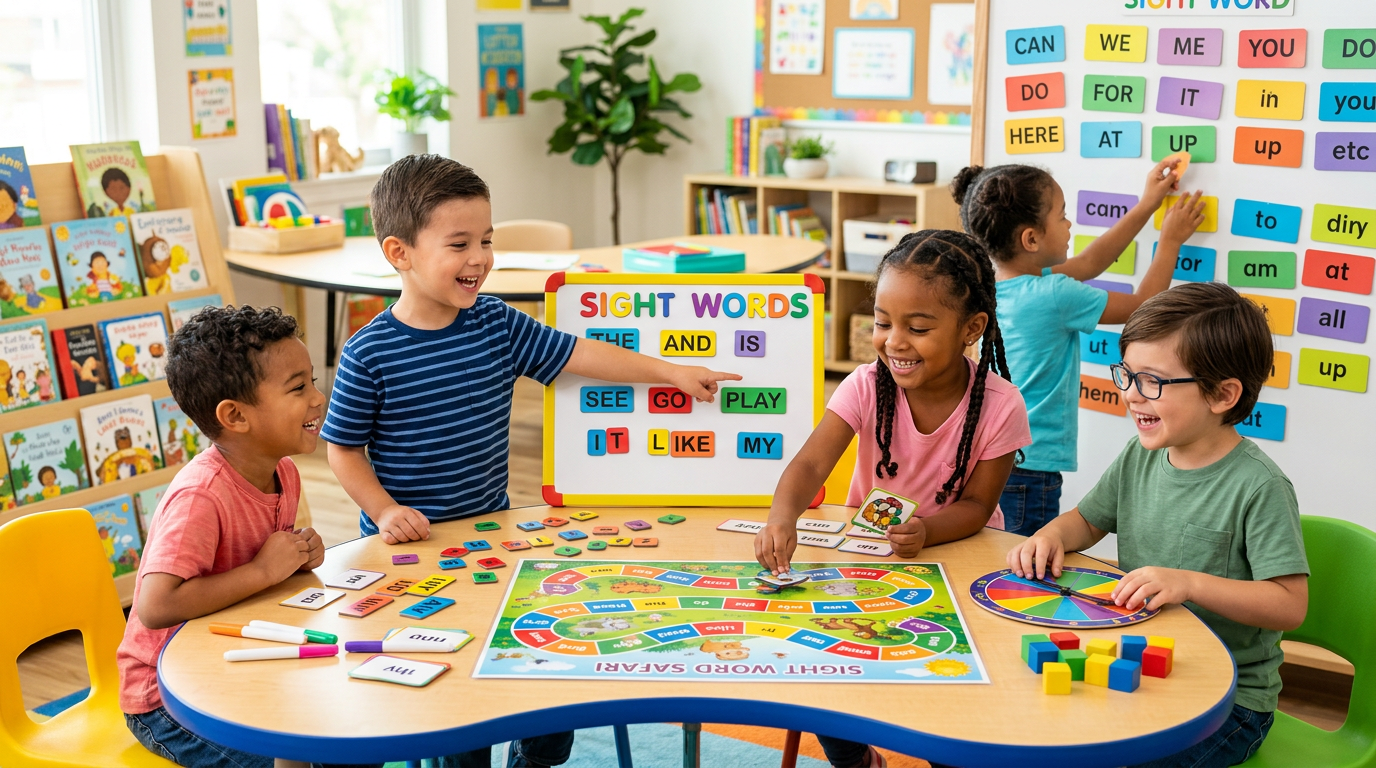
Welcome to the ultimate guide for early literacy! Learning to read is a crucial milestone in a child's educational journey. When young learners master sight words, it is like turning on a light bulb in their minds. Instead of feeling like hard work, learning high-frequency words becomes something children actively look forward to. Explore the science, the hands-on physical games, and the digital tools that are transforming early literacy through movement, repetition, and play.
Implementation Best Practices
- Track Progress Diligently: Utilize the comprehensive reporting dashboards in tools like SplashLearn and Khan Academy Kids to monitor the exact percentage of assignment completion and accuracy.
- Differentiate Learning: Ensure students who master words quickly move to more advanced digital quests (like those on eSpark), while providing multisensory interventions (shaving cream, letter cups) for those struggling.
- Consistent Terminology: Whether your school mandates the Dolch list or the Fry list, ensure consistency in how you talk about these words so students do not get confused between classrooms.
Help Your Child Fall in Love with Reading
Picture This! teaches visualization step-by-step so children can genuinely understand—and enjoy—what they read.
Related Articles

Sources & References
- #54: Science of Reading Strategies for Teaching Sight Words in Kindergarten - Science of Reading Formula
- Comparing the Dolch and Fry High Frequency Word Lists | Readsters
- How Multisensory Activities Enhance Reading Skills - Edutopia
- 10 Clever Games to Help Your Child Learn Sight Words - Curious World
- 11 Best Sight Word Apps to Boost Reading Skills (Free & Paid) - SplashLearn
- Award-winning phonics and reading games - Teach Your Monster to Read
- Fun Ways to Teach Sight Words: 12 Hands-On Activities
- Sight Words 101 - Scholastic
- Reading Eggs and the Science of Reading: An Evidence-Based Program for Educators
- What's the difference between Dolch and Fry sight words? - Reach All Readers