
Free phonemic awareness worksheets & activity cards
This is an oral, grown-up-led pack — not a handwriting pack. You get two fill-in worksheets plus 16 reusable activity cards. A grown-up reads each prompt; your child listens, says an answer aloud and plays with the sounds. There is no pencil, table or cutting required.
It covers the full sound-awareness ladder before letter work begins: rhyming, syllables, onset-rime, blending, segmenting and then manipulating sounds. Download the real six-page US-Letter PDF free for home, homeschool or classroom use.
2 worksheets + 16 reusable oral activity cards. Free to print and reuse.
What’s inside the six-page pack
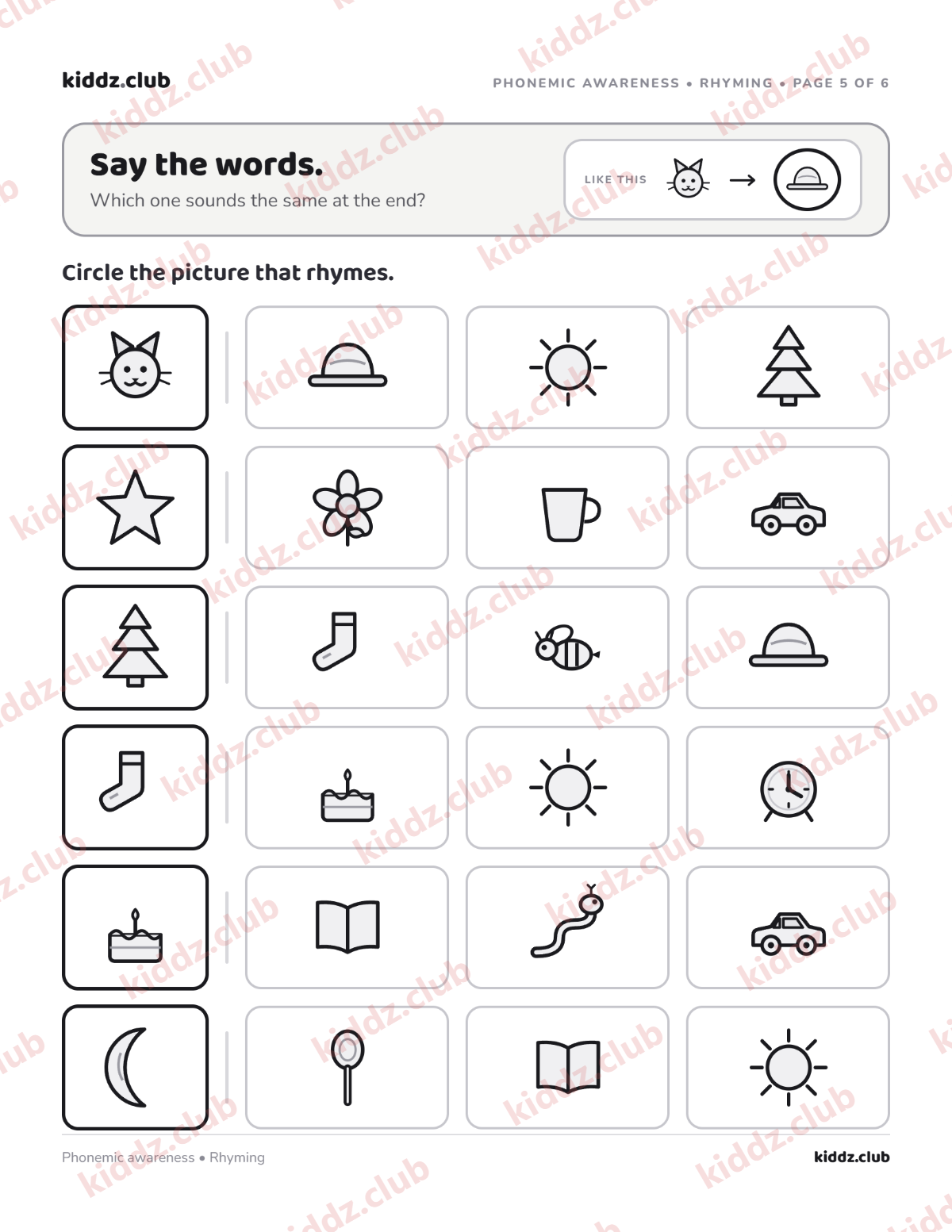
Pages 1 and 5 — two fill-in worksheets. One focuses on syllables and one on rhyming. They give a child a calm, visible place to respond after the sounds have been said together.
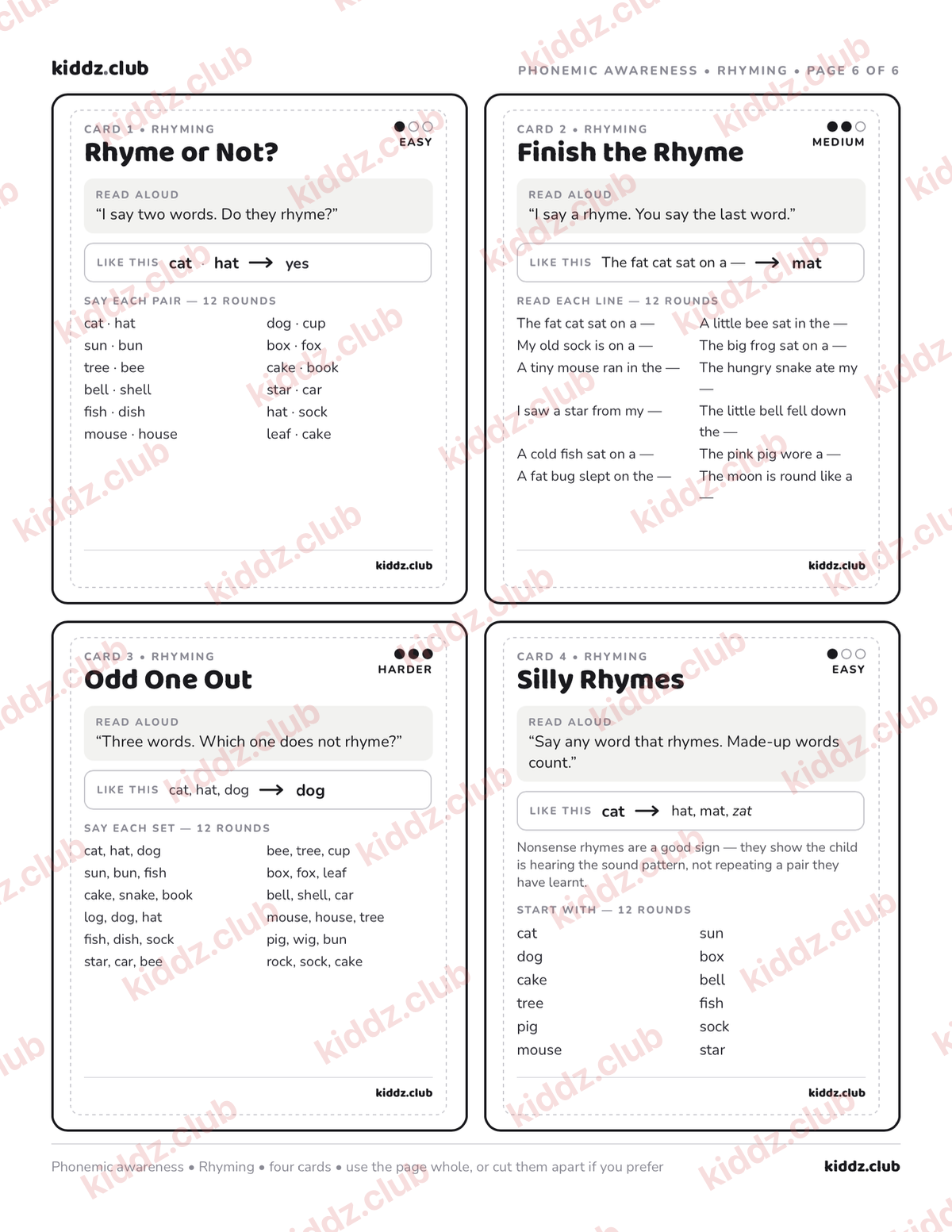
Pages 2, 3, 4 and 6 — 16 reusable activity cards across four skills. There are four cards each for syllables, onset-rime, sound work (blending, segmenting and manipulation), and rhyming. Read one prompt aloud, wait for the answer, then use another card next time. Keep the pages whole, or cut the cards apart only if that suits your routine.
This makes the pack easy to return to: pick a single card for a two-minute game in the car, at breakfast or before a reading session. The child does the thinking by ear; the adult does the reading.
See every page before you download
Each preview shows one real page. Click any one for the watermarked full-size image, ready for sharing or saving to Pinterest.
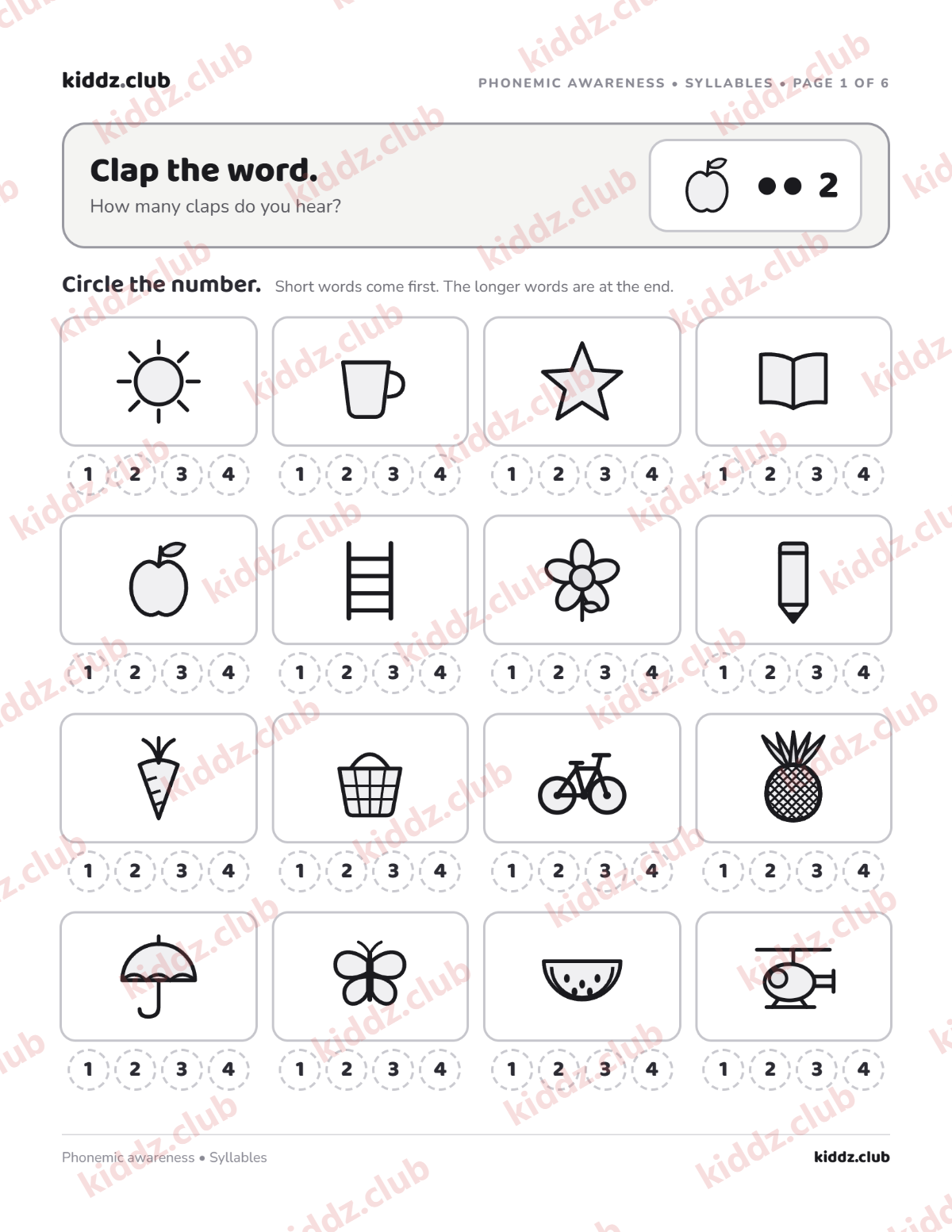
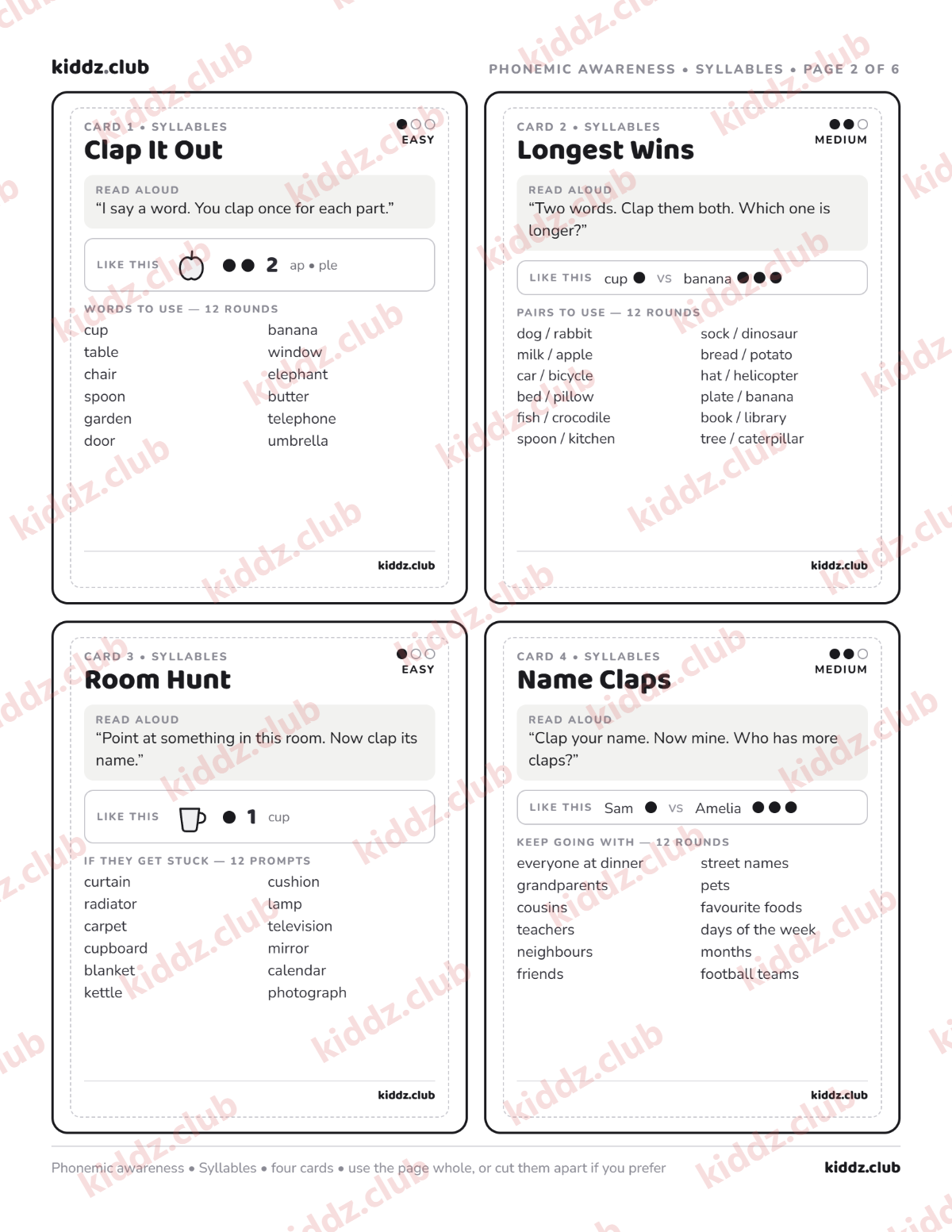
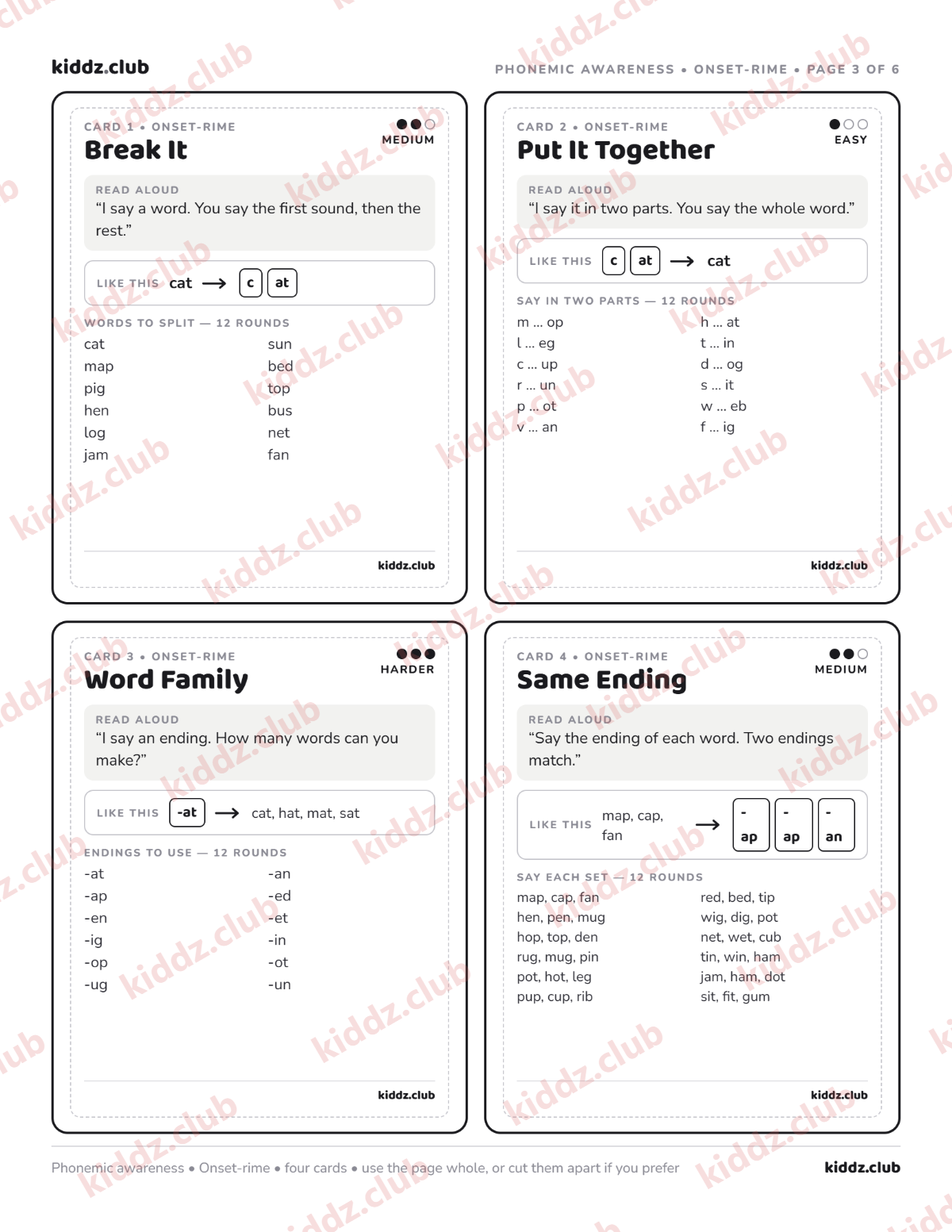
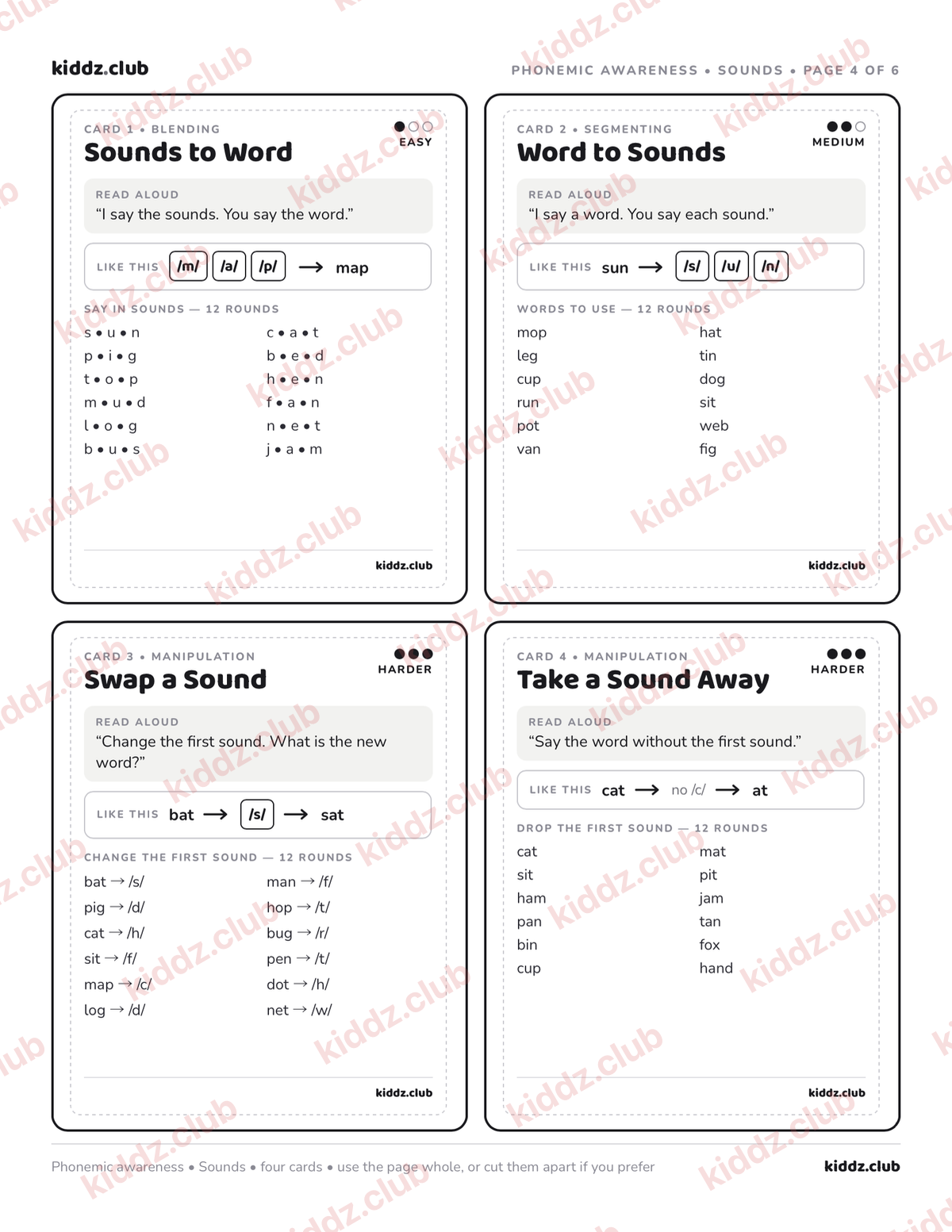
What phonemic awareness means — before letters
Phonemic awareness is an ear-based skill: noticing and working with the sounds we say in words. A child can practise it with eyes closed. They do not need to know letter names, match sounds to print, read a word or write an answer first.
That is different from phonics. People sometimes search for “phonics awareness worksheets,” but phonics connects spoken sounds to letters and spelling; phonemic awareness works with the spoken sounds themselves. This pack deliberately stays on that earlier listening stage.
The sound-awareness ladder
- Rhyming: hear that cat and hat end alike.
- Syllables: clap or count the beats in a word, such as ti-ger.
- Onset-rime: split sun into the first sound /s/ and the word family /un/.
- Blending: push /m/ /a/ /p/ together to say map.
- Segmenting: pull map apart into /m/ /a/ /p/.
- Manipulating sounds: change, add or take away a sound — for example, change the /m/ in map to /t/ to make tap.
The order is a guide, not a test. Start with the easiest game your child enjoys, repeat it briefly, and leave the more detailed sound work until their ear is ready.
How to use the oral cards
- Read, don’t quiz. Say the prompt clearly, then give your child time to listen and answer aloud.
- Use one card at a time. A quick success is more useful than working through a whole page.
- No set-up needed. Leave the sheets intact and point to a prompt; cutting the cards apart is completely optional.
- Keep letters out of it for now. If the child can hear the sounds, phonics has a much stronger foundation when letters arrive.
Ready to connect those secure listening skills to print? The next stage is the kindergarten phonics worksheets, where children begin matching sounds to letters and blending simple words.
Common questions
What is phonemic awareness?
It is the ability to hear and work with the sounds in spoken words. It happens by ear before children need to read, write or look at letters.
Is phonics awareness the same as phonemic awareness?
No. Phonemic awareness is listening to and changing spoken sounds; phonics links those sounds to written letters. This pack stays on the listening side, before letter work begins.
What age are these activities for?
They suit preschool and early kindergarten children, usually around ages 3 to 6. Choose the cards that match what your child can comfortably hear and answer aloud.
Do I need to cut out the activity cards?
No. The cards work perfectly well as full printed pages: point to or cover one prompt at a time. Cutting is optional if you want loose cards for repeat games.
Are these worksheets free?
Yes. This six-page PDF is free for personal, homeschool and classroom use. Print and reuse it as often as you need; please do not republish or resell it.
Ready for More Than Worksheets?
Picture This! teaches visualization step-by-step so children can genuinely understand—and enjoy—what they read.