
Pre-K Phonics Worksheets
At 3–4 (the pre-K or nursery year), phonics means three simple things: noticing letter shapes, hearing that spoken words start with sounds, and getting comfortable holding a pencil. Your child does not need to be reading yet — nothing on this page asks them to. Every printable below works through pictures, tracing and spoken sounds, in sessions short enough to end before the wriggling starts.
Once your child can name a handful of letters and enjoys the sound games, the next rung up is the preschool phonics worksheets (ages 4–5), where the focus shifts from letter shapes to the sounds they make.
Before letters — listen and play with sounds
Before letter work, children can build their listening ear with rhymes, claps and spoken sound games. The Phonemic Awareness Worksheets & Activity Cards are the oral-sound stage: a grown-up reads the prompt and your child answers aloud — no reading or writing needed.

Start here — the first seven sounds
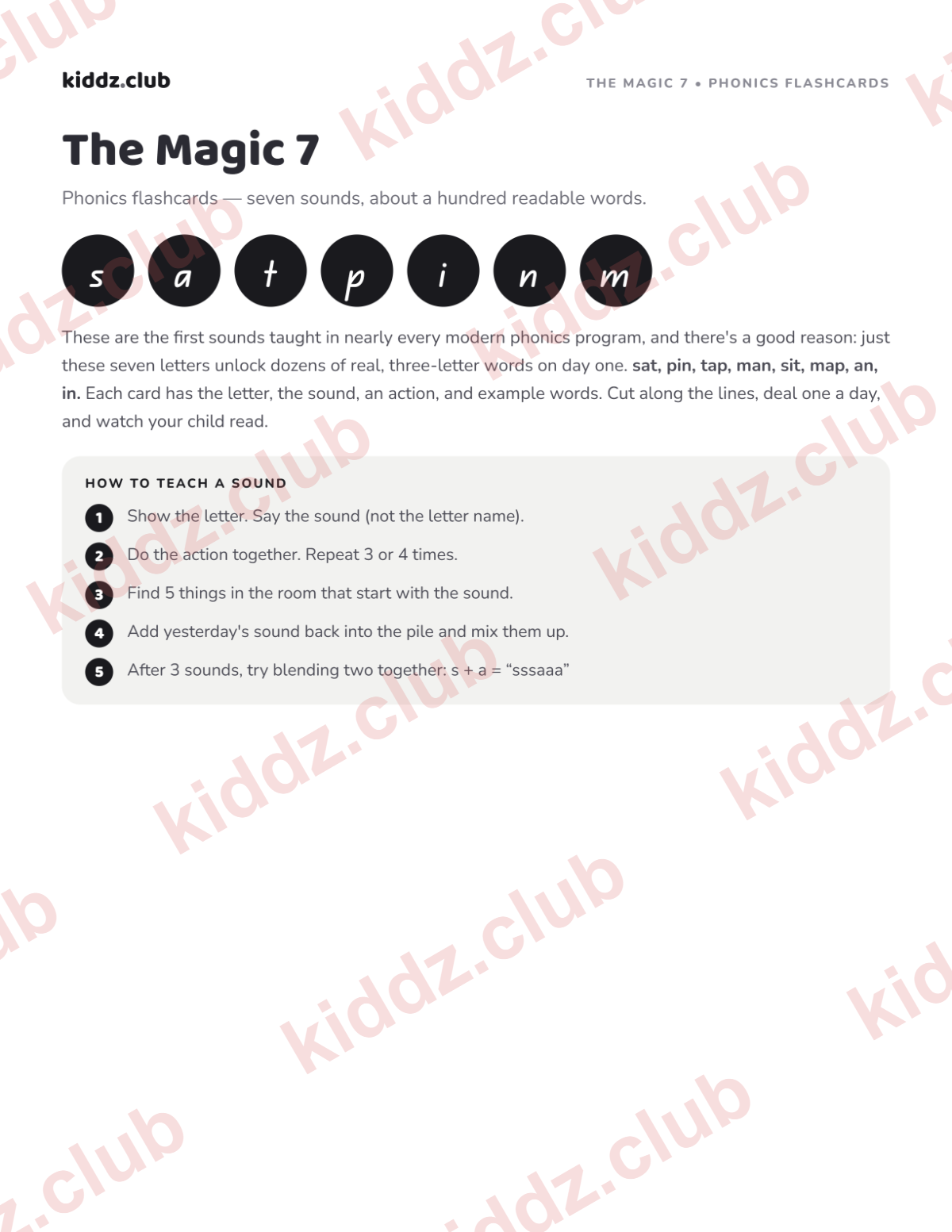
The Magic 7 — s, a, t, p, i, n, m — are the seven letters worth meeting first. At this age, "meeting" a letter means looking at its shape, saying its sound together, and doing the action on the card. One card a week is a lovely pre-K pace.
Full teaching notes on the Magic 7 Phonics Flashcards page.
Letter worksheets A–Z
When your child starts noticing letters everywhere, give each one its own page. Every letter of the alphabet has a free tracing-and-spotting worksheet — a letter-shaped maze, pictures to circle, and tracing rows sized for small hands. Follow your child's interest: the letter their name starts with is always the best place to begin.
Browse all the letter worksheets A–Z →
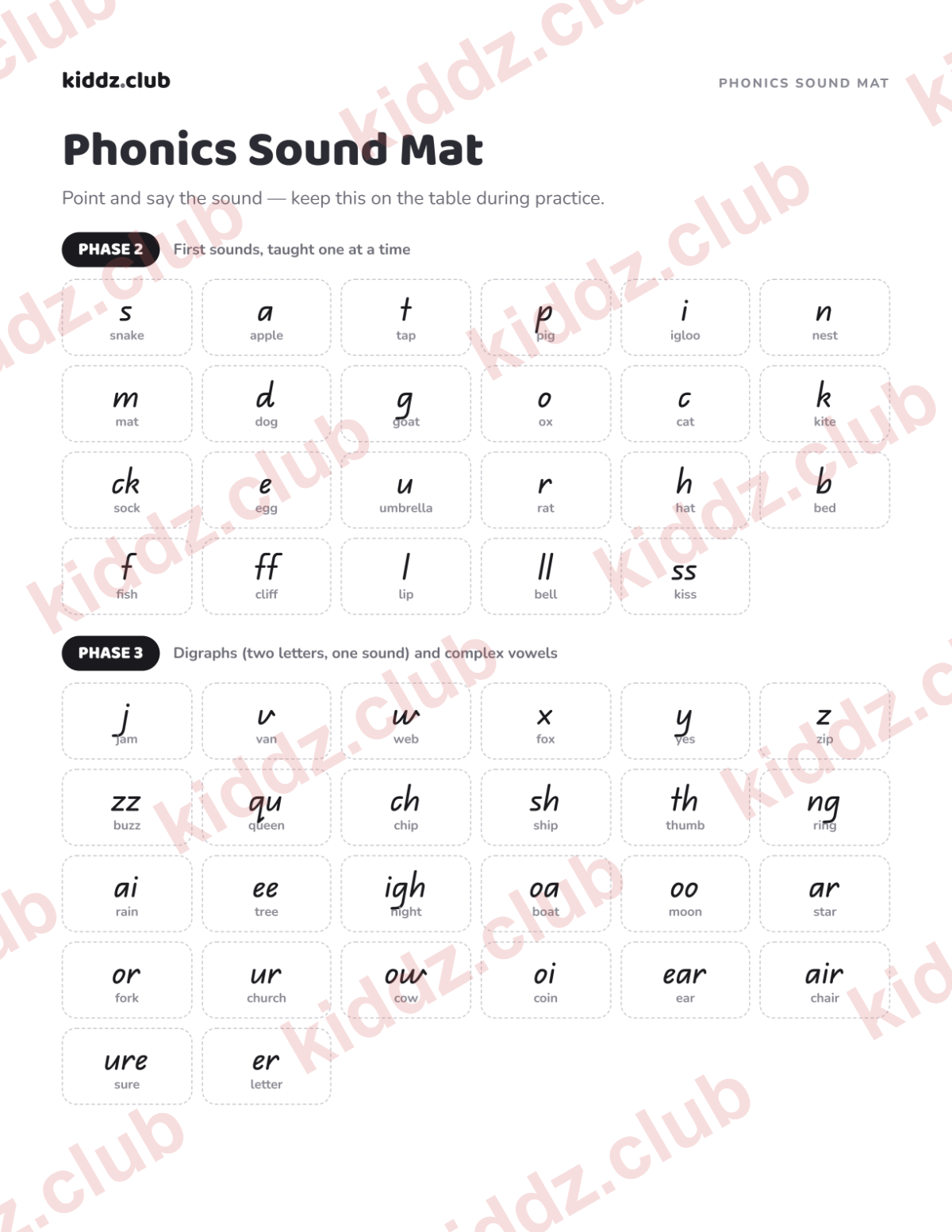
Sound reference for the wall
A one-page chart of every letter with a picture cue — stick it on the wall or the fridge and point at letters together during the day. At 3–4 it's a spotting game, not a study aid.
Play and review
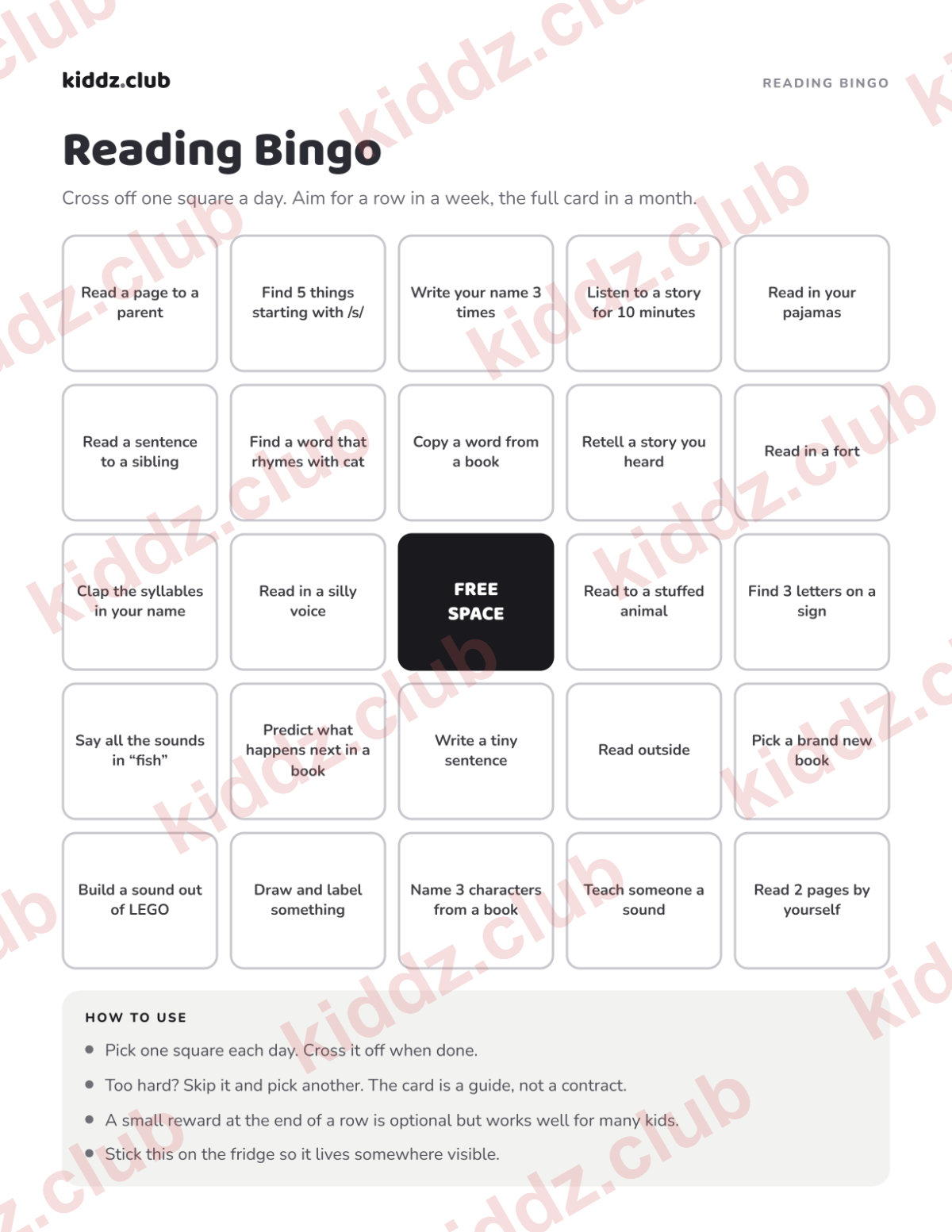
Little ones love ticking things off. The bingo card is 25 tiny activities — find something that starts with /s/, trace a letter, listen to a story — that a grown-up reads out and a 3–4-year-old does. One square a day builds the habit gently.
Seasonal fun
Holiday flashcards keep letter-spotting fresh through the year. At this age, use them as picture-and-sound cards: name the picture together and listen for the first sound. (The matching seasonal worksheets and mini-books involve real reading, so they sit higher up the ladder.)


Guides for parents
- When should kids start reading? A realistic timeline from 3 to 8
- Signs of reading readiness (and what to do if they're not there yet)
- How to teach phonics at home (without making it feel like school)
- The 5-minute reading routine that actually sticks
Get the Pre-K starter bundle by email
Pop your email in and we'll send the Magic 7 Flashcards and Magic 7 Activity Pack straight to your inbox — ready to print.
No spam, ever. Your printables arrive either way.
Want the entire printables library?
Kiddz.club members can download every printable on the site as one zip — plus full access to the Picture This! reading program. Start with a free 7-day trial.
Common questions about Pre-K phonics
Why do these printables never ask a 3–4-year-old to read?
Because at this age nothing on the page should depend on reading. Everything here works through pictures, shapes and spoken sounds — a child who can't read a single word can do all of it. That's the same rule we apply across the site: children are only ever asked to work with what they can actually manage at their level, never to guess at words beyond it.
What age should we start Pre-K phonics?
Around 3, and only as play. If your child enjoys pointing at letters on signs, tracing shapes with a finger, or naming what a picture starts with, they're ready for these activities. If they resist, wait a few weeks and try again — starting later loses nothing.
Does my child need to know their letters before using these?
No — these worksheets are how children learn their letters in the first place. Recognising a letter's shape and hearing its sound is the whole goal of this stage, not a prerequisite for it.
How long should a session be, and how should I print these?
Five minutes is plenty at 3–4 — one flashcard or one tracing page, then stop while it's still fun. Print on regular letter or A4 paper; the flashcards last longer on cardstock, and a chunky pencil or crayon suits small hands better than a fine one.
Ready for More Than Worksheets?
Picture This! teaches visualization step-by-step so children can genuinely understand—and enjoy—what they read.