
Preschool Phonics Worksheets
Somewhere around age 4, the question changes. It stops being "what letter is this?" and becomes "what sound does sun start with?" — and that switch, from naming letters to hearing sounds, is the one that actually leads to reading. The preschool year (ages 4–5) is when it happens, and every printable on this page is built to make it happen through play: listening games, picture-matching, and the first gentle sound-to-letter work.
Still working on recognising letter shapes? Step down to the Pre-K phonics worksheets (ages 3–4). Already pushing sounds together into little words? Jump up to the kindergarten phonics worksheets (ages 5–6).
First, hear the sounds
Before matching sounds to letters, make sure the listening work is playful and secure. The Phonemic Awareness Worksheets & Activity Cards build rhyming, syllables, onset-rime, blending, segmenting and sound manipulation with a grown-up reading the prompts and the child answering aloud.

Beginning sounds
This is the page's headline skill — hearing the first sound in a spoken word. The three-page pack practises it entirely through pictures: circle the letter a picture starts with, spot the /m/ pictures, write the first sound. It's also the exact skill schools check on intake.
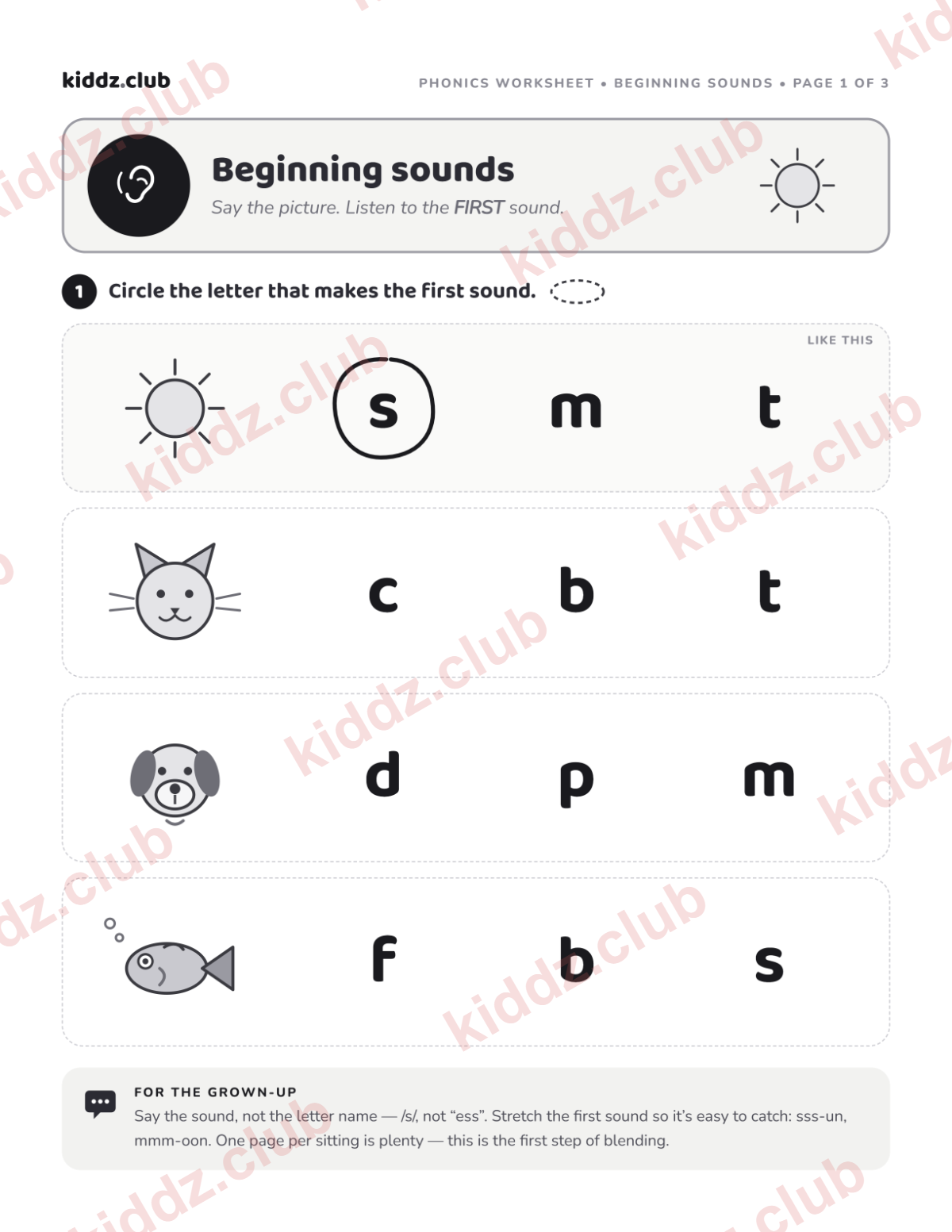
Full teaching notes and the oral games that make it click on the beginning sounds worksheets page.
Letter sounds A–Z
As the ear tunes in, connect each sound to its letter. Every letter of the alphabet has a free worksheet pairing the letter with pictures of its sound — so /s/ isn't an abstract idea, it's the snake on the page. Work through them in any order your child's curiosity takes you.
Browse all the letter-sound worksheets A–Z →
Practise the first seven sounds
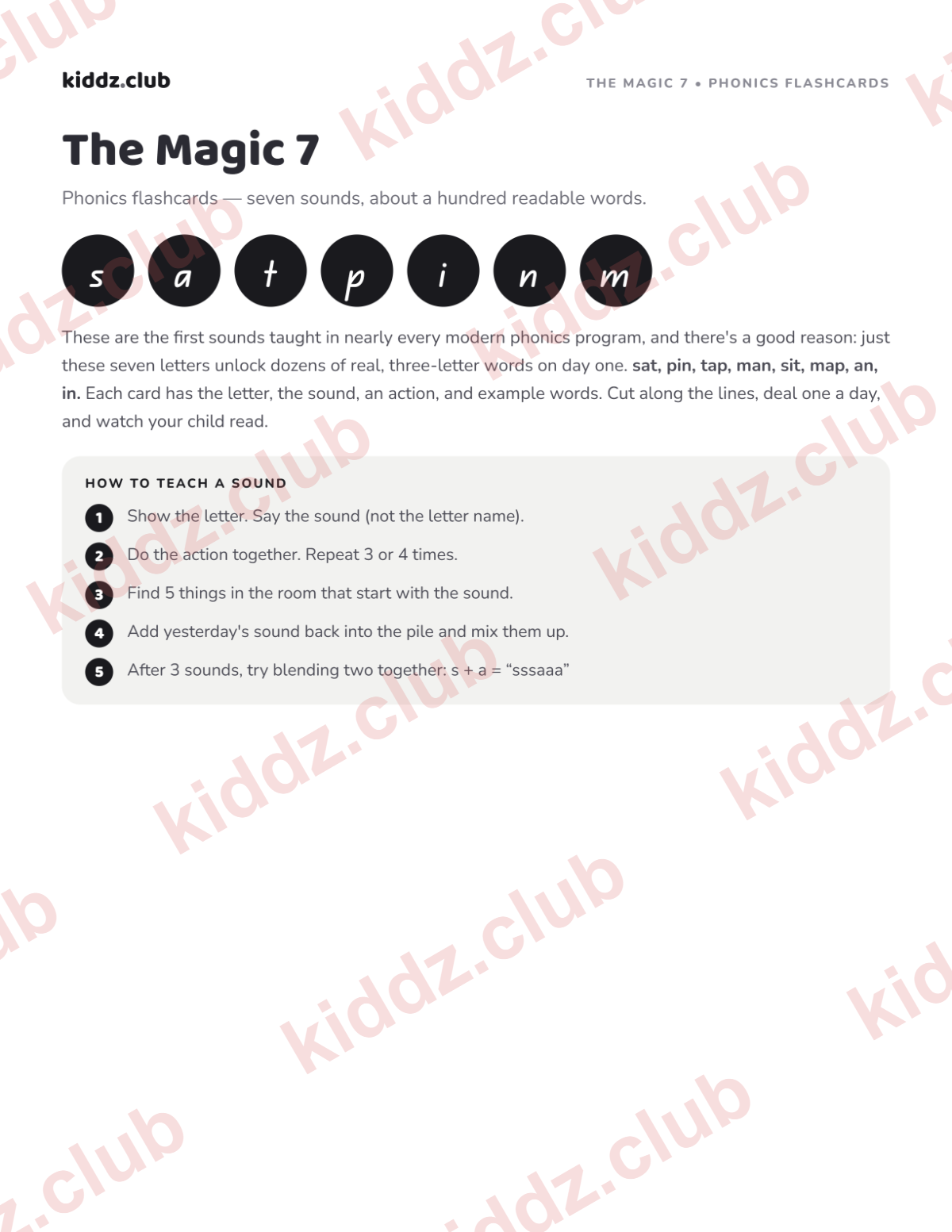
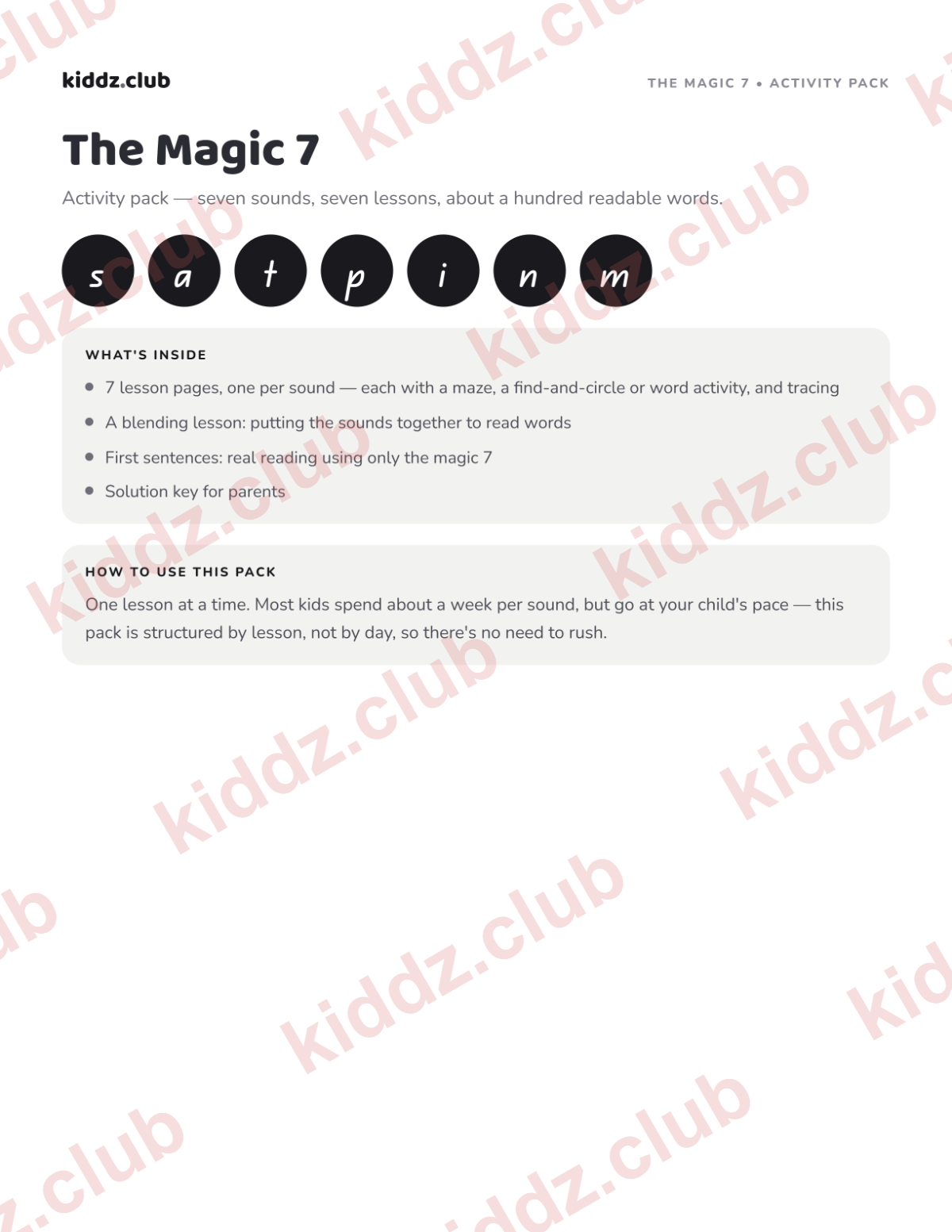
The 13-page Magic 7 Activity Pack gives each of the seven most useful sounds — s, a, t, p, i, n, m — its own lesson page: a letter-shaped maze, circle-the-pictures, and tracing rows. It ends with the very first blending lesson for when your preschooler is ready to try pushing two sounds together.
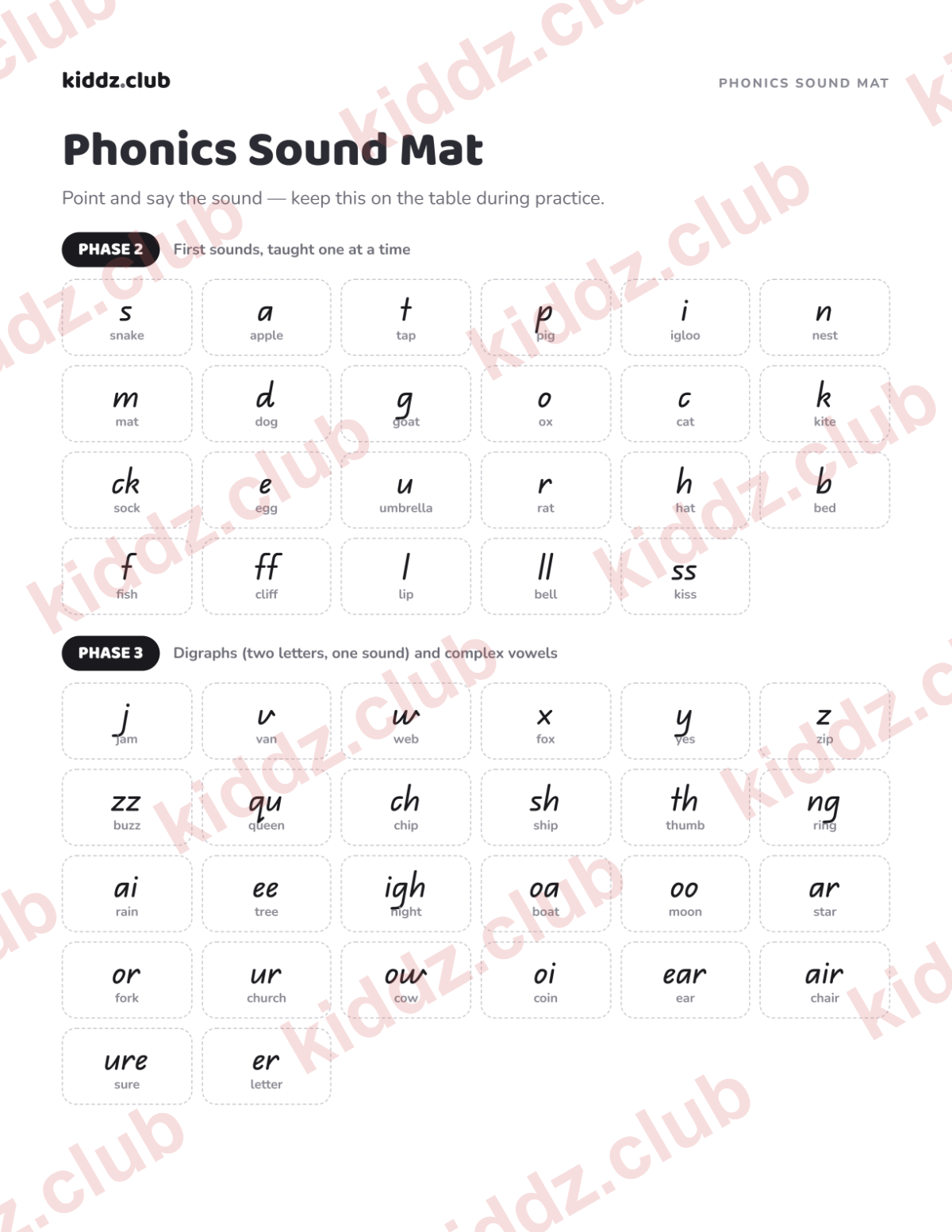
Sound reference for the wall
One page with every common sound and a picture cue. On the wall above the practice table, it turns "what sound does this letter make?" into a look-and-point rather than a stall.
Seasonal fun
Six holiday sets to keep sound practice fresh all year. The flashcards work for every preschooler; the fold-up mini-books are for children who've started blending — each one comes with a link to the folding guide right beside it. The big outline pictures also make gentle first phonics coloring worksheets for little hands.


Guides for parents
- When should kids start reading? A realistic timeline from 3 to 8
- Signs of reading readiness (and what to do if they're not there yet)
- How to teach phonics at home (without making it feel like school)
- The 5-minute reading routine that actually sticks
Get the preschool starter bundle by email
Pop your email in and we'll send the Magic 7 Flashcards and the Magic 7 Activity Pack straight to your inbox — ready to print.
No spam, ever. Your printables arrive either way.
Want the entire printables library?
Kiddz.club members can download every printable on the site as one zip — plus full access to the Picture This! reading program. Start with a free 7-day trial.
Common questions about preschool phonics
Why do these worksheets only use words a 4–5-year-old can sound out?
Because guessing isn't reading. Wherever a word appears on these pages, it's one your child can work out from sounds they've been taught — and where they can't yet, the activity runs on pictures instead. A child who is asked to "read" words beyond their sounds learns to guess from pictures, which is a habit schools then have to unteach.
What does "beginning sounds" actually mean?
It's the skill of hearing which sound a spoken word starts with — the /s/ in sun, the /m/ in moon. It sounds tiny, but it's the hinge of learning to read: a child who can pull the first sound out of a word is ready to start mapping sounds onto letters.
How is this different from the Pre-K page?
Pre-K (ages 3–4) is about letter shapes — spotting them, naming them, tracing them. Preschool (ages 4–5) flips the focus to sounds: hearing where a word starts, matching that sound to its letter, and getting ready to push sounds together. Same friendly format, one rung further up.
When does blending start, and what comes after this page?
Blending usually clicks somewhere between 4½ and 6, once a child knows a handful of letter sounds and can hear beginning sounds reliably. The very first blending practice is here (in the Magic 7 Activity Pack); when your child starts pushing sounds into words like sat and pin, move up to the kindergarten worksheets for CVC words and first sentences.
Ready for More Than Worksheets?
Picture This! teaches visualization step-by-step so children can genuinely understand—and enjoy—what they read.