
Vowel team phonics worksheets
A vowel team is two vowels working together to make one sound — the ai in rain, the ee in see, the oa in boat. They're the natural step after magic-e: magic-e introduced the long sounds; vowel teams are the other main way English spells them.
You may have heard "when two vowels go walking, the first one does the talking." It's unreliable for many teams — so these packs teach the teams that actually keep the pattern.
The vowel team packs
AI and AY pack — long a, rain and play
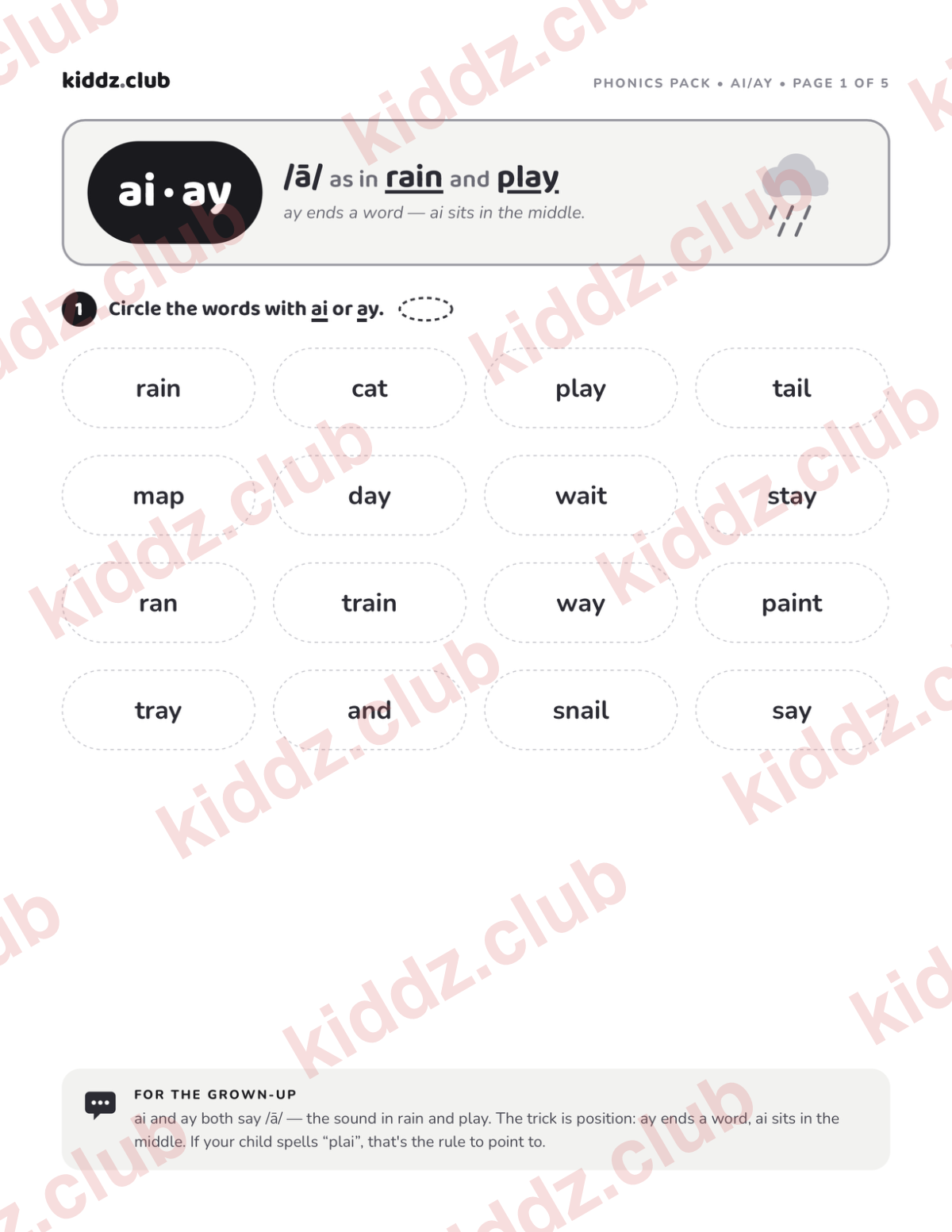
The team with a rule a child can actually use: ay ends a word, ai sits in the middle. Teach this pair first. Full ai/ay page →
EE and EA pack — long e, see and sea
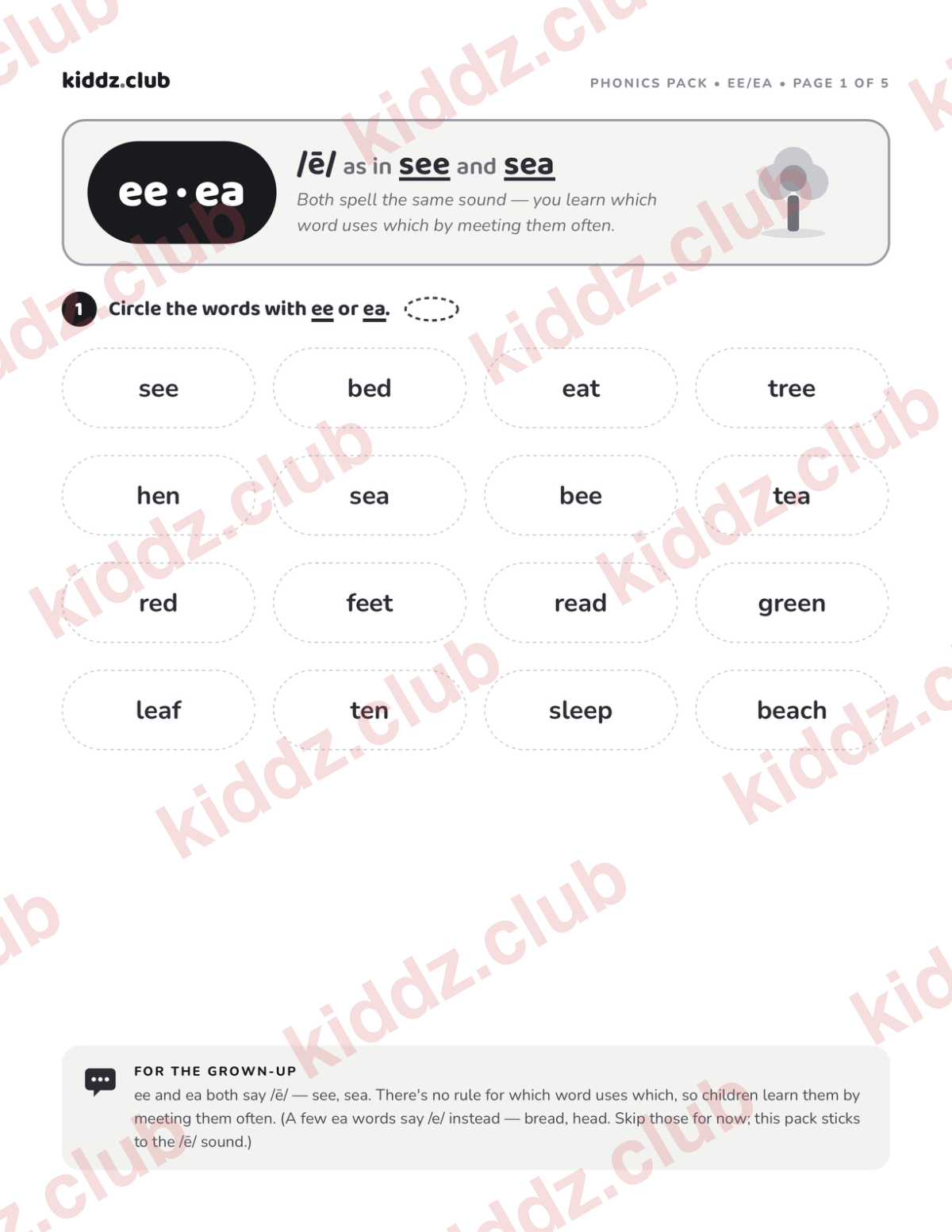
No rule here — children learn which word uses which spelling by meeting the words often, which is what this pack's five activities are built for. Full ee/ea page →
OA and OW pack — long o, boat and snow
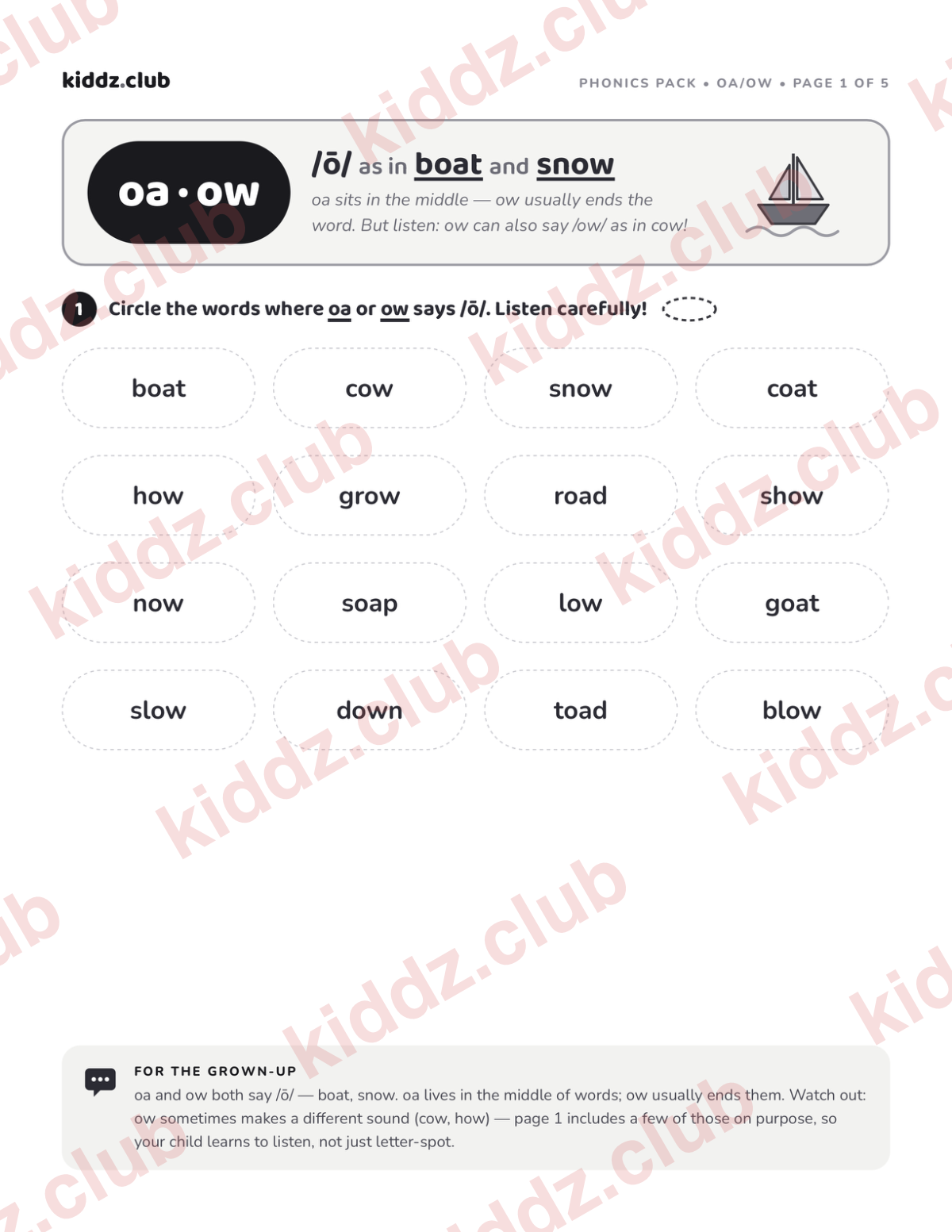
Position first (oa inside, ow at the end), then the twist: ow also spells the sound in cow — this pack trains children to hear the difference. Full oa/ow page →
OO pack — moon and book
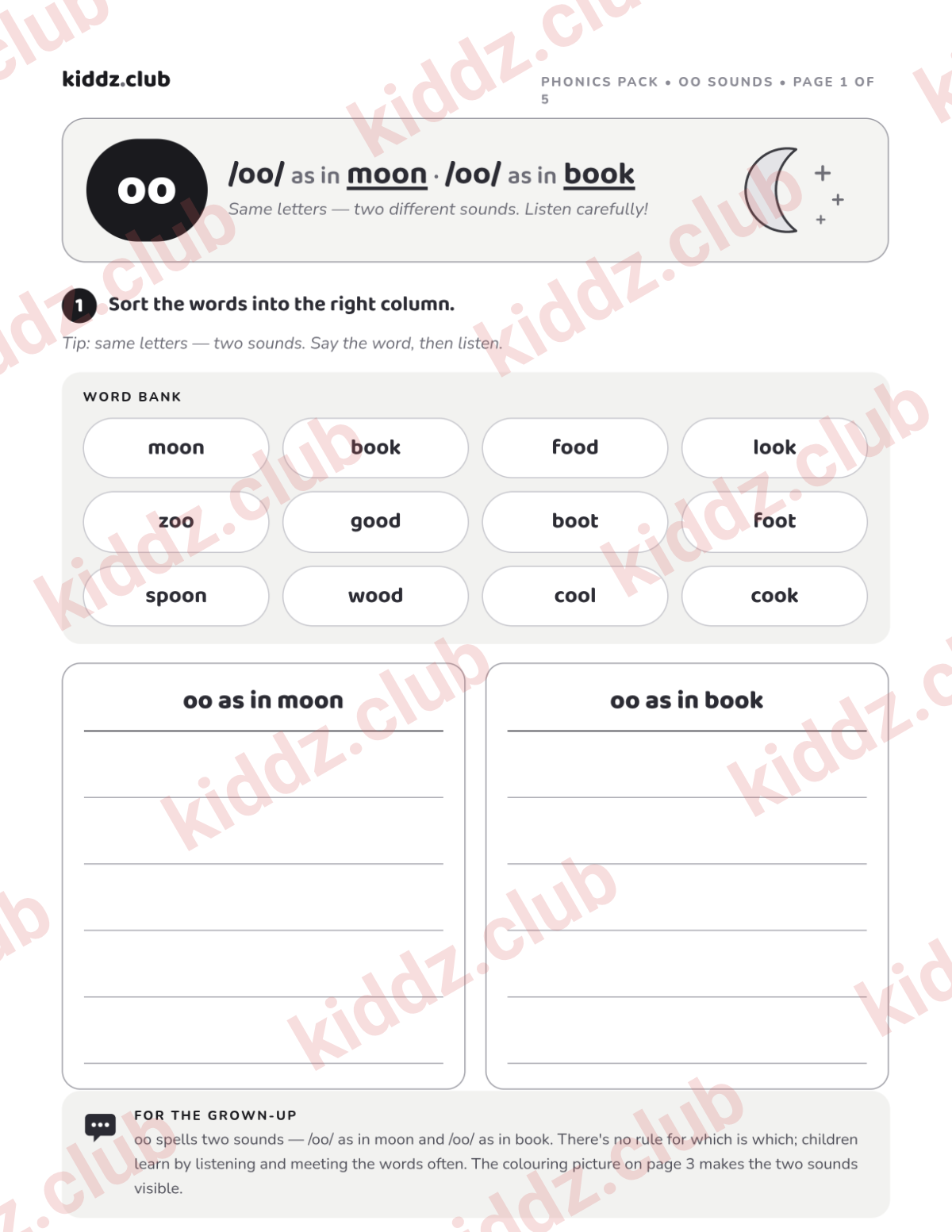
One spelling, two sounds — /oo/ as in moon, /oo/ as in book. No rule, just listening — and a hidden picture that only appears when every word is coloured by its sound. Full oo page →
OI and OY pack — coin and boy
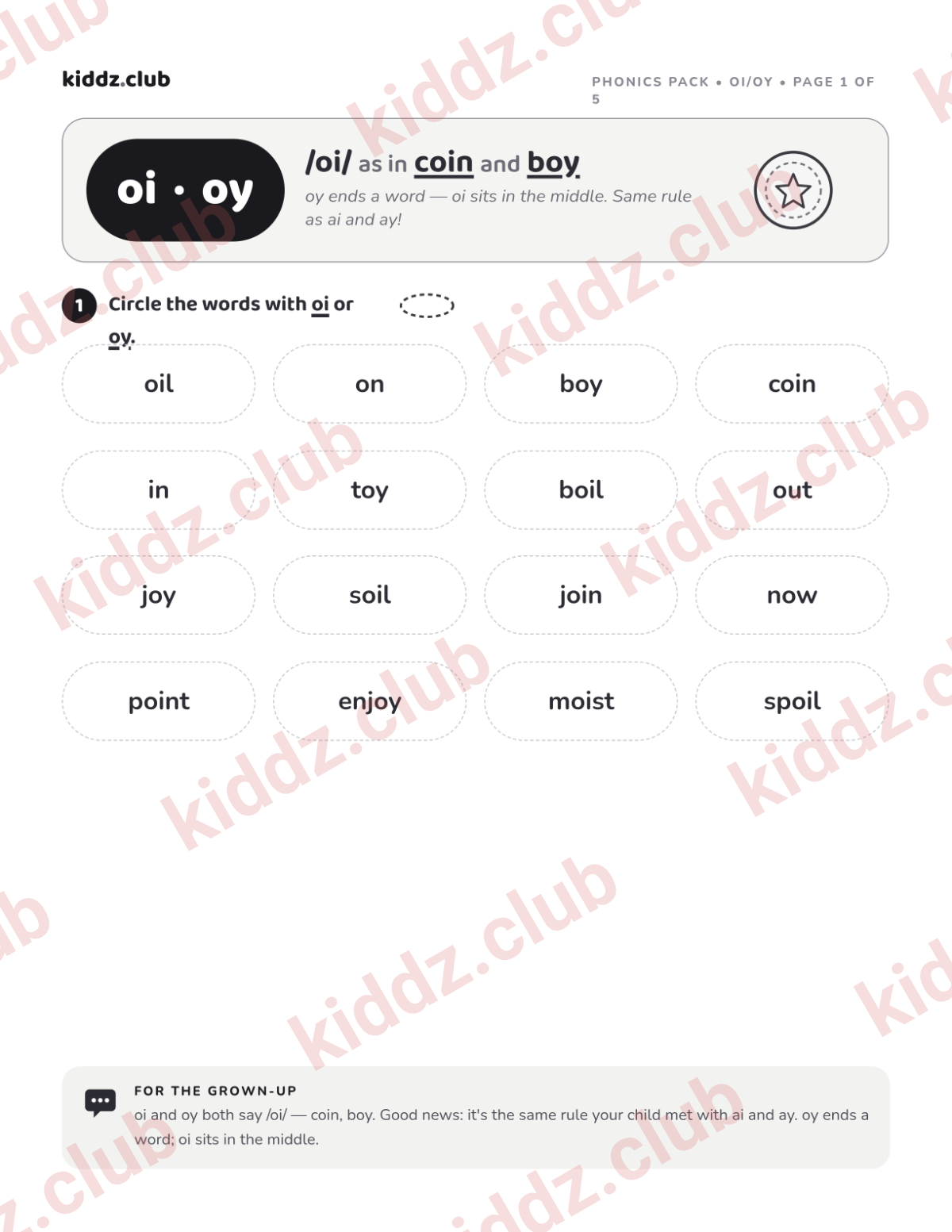
A brand-new sound with a familiar rule: oy ends a word, oi sits in the middle — the same logic as ai/ay. Ends with a phonics maze solved by ear. Full oi/oy page →
AU and AW pack — sauce and saw
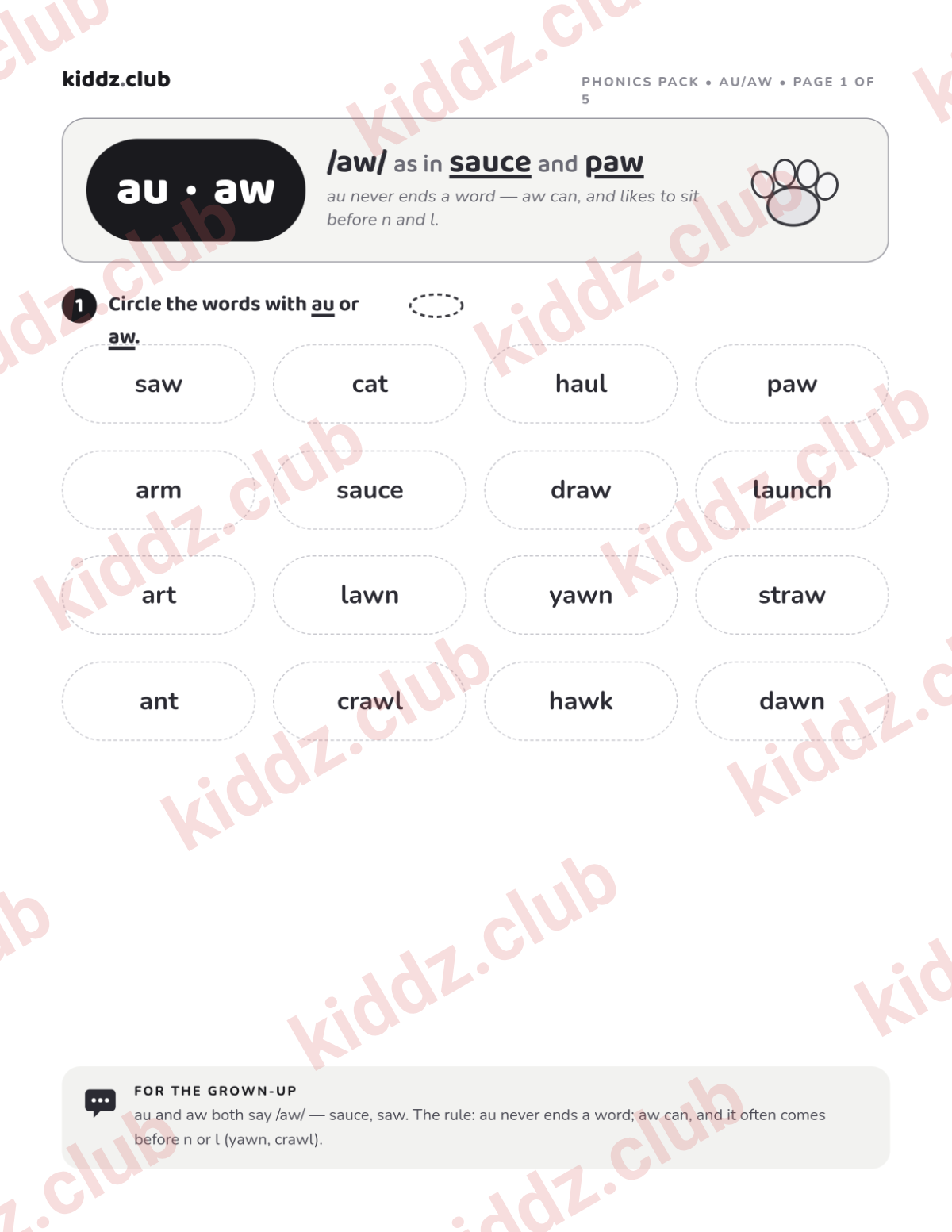
The /aw/ sound with a short, honest rule: au never ends a word; aw can. Ends with a hawk-and-nest maze. Full au/aw page →
How to teach vowel teams — the order
- ai/ay first. The rule is clean (ay at the end, ai in the middle) and it builds confidence — spelling suddenly has logic.
- Then ee/ea. Introduces an honest new idea: some teams you just learn by meeting the words often. No false rules.
- Then oa/ow. Introduces the next layer: some spellings make two sounds (snow vs cow), so listening matters as much as looking.
- Then oo. One spelling, two sounds (moon, book) — deepens the listening skill oa/ow started.
- Then oi/oy. A new sound with a familiar rule — the ai/ay position logic, reused.
- Then au/aw. The /aw/ sound, with its own short rule: au never ends a word.
One team pair at a time; each pack is a week or two of little-and-often practice. Ten minutes a day beats an hour on Saturday.
When to use these packs
Use these if:
- Your child reads CVC, digraph and magic-e words confidently
- Ages 6–8
Skip these if:
- They're still working on short vowels or digraphs — start with the short vowel worksheets or digraph worksheets
- They're already reading multi-syllable words fluently
Related resources
- Magic-e worksheets — the step before vowel teams: the first long-vowel spellings
- Long vowel worksheets — single sheets across all the long vowel spellings
- 1st grade phonics worksheets — the full pathway these packs belong to
- Part of the 2nd grade phonics pathway →
Common questions
What is a vowel team?
Two vowels (sometimes a vowel + w) working together to spell one sound — ai, ee, oa and friends. The ai in rain is one sound, not two.
Should I teach magic-e or vowel teams first?
Magic-e first: it introduces the long vowel sounds these teams re-spell. Vowel teams then show the second way to write them.
How many vowel teams are there?
Dozens — but a handful cover most early reading. The six most common are all here: ai/ay, ee/ea, oa/ow, oo, oi/oy and au/aw.
Are these worksheets free?
Yes — free for personal, classroom and homeschool use. Print as many copies as you need.
Ready for More Than Worksheets?
Picture This! teaches visualization step-by-step so children can genuinely understand—and enjoy—what they read.